



Ranked among the most popular sports in the world, ice hockey is not just a game; it has become a showcase of athleticism, competition, and national pride, uniting and inspiring fans across borders. While Canada and the United States are hockey’s powerhouses, the sport is also hugely popular in several European countries, such as the Czech Republic, Sweden, and Finland, all of which have built rich hockey traditions and produced several generations of elite players.
In the Czech Republic, hockey remains the most popular sport. The nation of just over 10 million people is home to approximately 110,000 registered hockey players, and has produced countless international stars throughout its history, including hockey legend Jaromír Jágr, NHL standout David Pastrňák, and women’s national team forward Tereza Vanišová, whose stardom on the national stage has led to international recognition.
While hockey has traditionally been viewed as a men’s sport, the landscape is beginning to change. The rise of the Professional Women’s Hockey League (PWHL) in North America has created new opportunities and increased visibility for female athletes worldwide. As a result, more young girls are finding their way onto the ice than ever before.
Today, nearly 210,000 registered female hockey players compete across 81 countries. Although the vast majority are concentrated in Canada and the United States, European nations have increasingly invested in growing the women’s game and creating new opportunities for participation.
Interest in and support for women’s hockey in the Czech Republic has increased considerably in recent years. On paper, the country boasts a successful women’s national team, growing participation numbers, and increasing international recognition. Yet at the grassroots level, the pathway for young girls remains far less straightforward.
Unlike in many hockey nations, most girls who play in the Czech Republic do not develop within dedicated girls’ programs. Instead, they typically train and compete on boys’ teams within their local clubs, simply because there are few or no girls’ teams available in their region. In many cases, boys’ teams are also seen as more competitive and physically demanding, which can offer young players a faster and more challenging development pathway compared to the limited structure of girls’ programs.
In contrast, Canada has a far more established youth hockey system, with hundreds of girls’ teams across age groups and structured development pathways beginning at a very young age. Many players enter organized hockey programs as early as four or five years old.
For many Czech players, the lack of structure shapes their entire entry into the sport.
Sona Strizova of WHC Valkyries Brno splits her time between women’s hockey and boys’ hockey. She first joined a boys’ team at the age of 11 and later returned to boys’ hockey again at 16.
“I started to play with boys again, because I think it is better than women,” she said. “It is a better league, even if the boys’ team was challenging.”
Strizova’s experience reflects a common trade-off for many young players in the Czech Republic, where boys’ hockey is often seen as offering a higher level of competition, even if it comes with greater physical and developmental challenges.
The Women’s Ice Hockey Association, which oversees youth girls’ hockey in the Czech Republic, notes that development is more complex than it may appear. Speaking to Brno Daily, the organization emphasized that women’s hockey has existed in the country for decades, but has historically received limited attention from the public, governing bodies, and media. Increasing visibility remains one of the sport’s key challenges.
In the absence of a fully developed girls’ system, opportunities for female players are increasingly being created through independent initiatives and community-led programs.
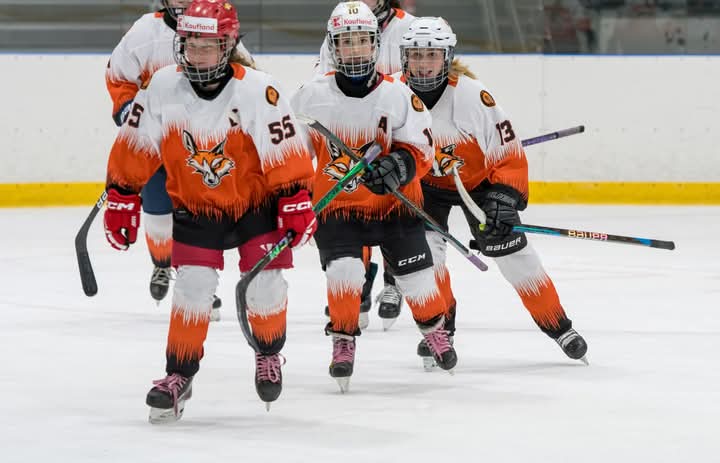
According to Karel Šmejkal, head coach of Fox Vysočina, support for girls’ hockey in the Vysočina region relies heavily on volunteer coaches and parents. In this context, Fox Vysočina plays an important role in providing structured training opportunities for girls under 15 in a region where dedicated girls’ programs remain limited.
“We give every girl the opportunity to play, regardless of age or skill level,” Šmejkal explained. “Our doors are always open to everyone.”
Alongside regular training and games, the club also organizes summer camps and additional activities aimed at developing all-around athletic skills and maintaining engagement in the sport. For many players, these environments offer one of the few spaces where they can consistently train and compete alongside other girls.
These initiatives have helped foster a sense of community for players who might otherwise have limited access to structured development pathways.

“Everything is built on the positive work of private individuals and hockey enthusiasts,” Šmejkal said.
While Fox Vysočina is only one example, signs of gradual change are beginning to appear within Czech women’s hockey.
One of the most recent examples was the Áža Cup 2026, the first open tournament for the youngest girls organized by the Women’s Ice Hockey Association. The event, which took place on 18 April at the Břeclav Winter Stadium, was intended for players born between 2014 and 2019. The event reached full capacity, reflecting unexpectedly high interest.
Teams including HC Malé Lvice Břeclav, HC Fox Vysočina, and HC Vlci Český Těšín took part. The main aim of the Áža Cup is to broaden the player base in the youngest age categories. At this stage, since most girls still compete in mixed teams alongside boys, they have very few opportunities for dedicated girls’ matches. The strong demand for the first edition suggests there is growing space and demand for events of this kind within Czech hockey.
The tournament represents a small but visible step toward expanding structured opportunities for the youngest girls in the sport.
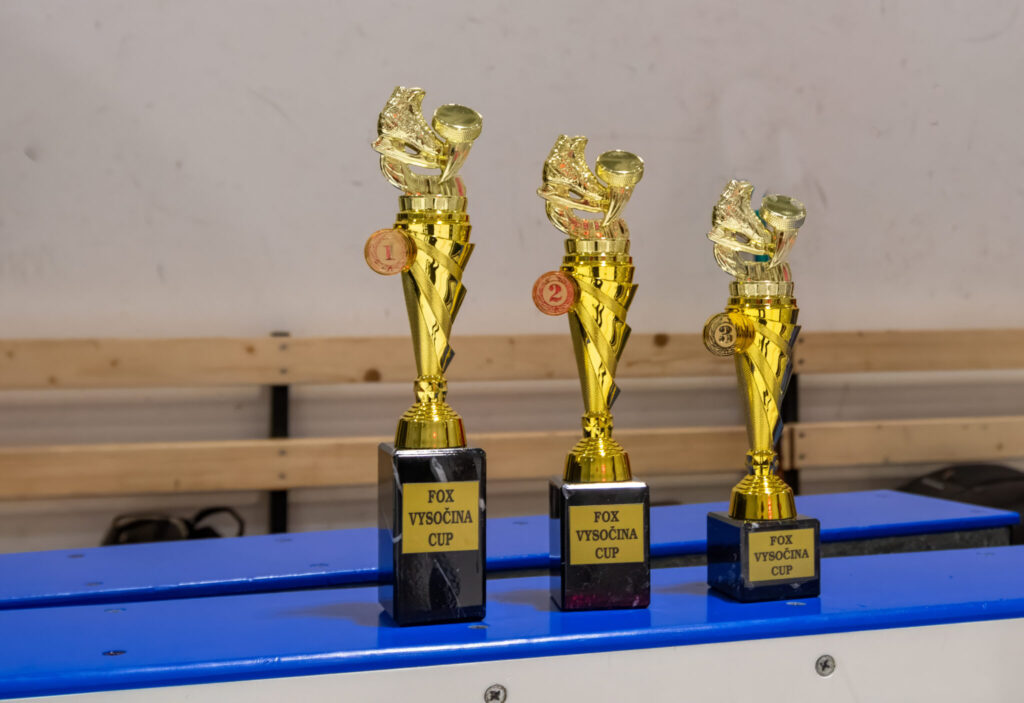
Despite the challenges, one theme runs consistently through the stories of players, coaches and organizations: interest in the women’s game is there. For many young girls in Czech hockey, the journey begins in environments that were not originally built for them. Yet, within those spaces, they are still finding ways to develop and compete.
At its core, hockey for these players is not just about competition, nor is the rink simply a place to play. It is where young girls develop their confidence, build a community, and find their passion for the game.