
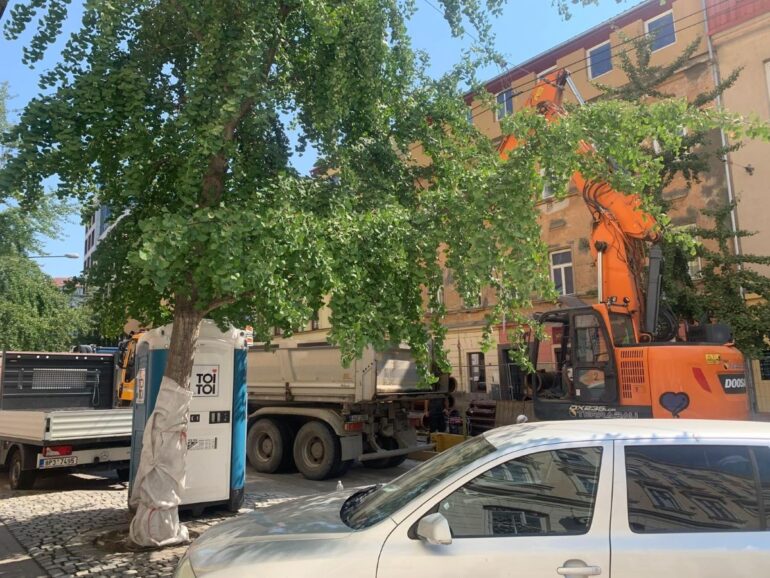

A mature street tree is not a decoration. In a city that is sweltering more each summer, it is infrastructure; it shades asphalt that would otherwise radiate heat back into homes long after sunset, it slows stormwater that would otherwise overwhelm drains, and it hosts an ecosystem that took decades to establish and cannot be rebuilt with a sapling and a press release. Brno has committed on paper to protecting its urban canopy as part of its response to heat and climate stress. What has happened on Slovákova in Brno-Střed over the past year shows how easily that commitment collapses the moment nobody is watching — because, in this case, nobody was allowed to.
A cantiere with two weeks’ notice
On 22 June 2026, Brněnské vodárny a kanalizace (BVK) began reconstructing the sewer network under Slovákova. Residents were told about it roughly two weeks before work started — enough time to move a parked car, not enough to ask a single serious question. It was only in July, reading documentation left in the site office, that residents discovered the project also involved the felling of a mature tree: a Ginkgo biloba planted more than 20 years ago, the largest and healthiest tree on the street, and home to a pair of wood pigeons that returns to nest there every season since 2018. Nobody had mentioned the fate of the tree when the works were announced. On 5 August, after weeks of trying to get a straight answer, residents finally got the site manager to confirm it in person.
The decision was already a year old
What residents have since dug out of the official project documentation turns this from an unfortunate local dispute into something closer to a structural failure of public participation. The felling permit was requested by the investor in early September 2025. The relevant authority issued its decision by the end of October 2025, and it became legally final in mid-November 2025. Czech administrative procedure gives affected parties 15 days from delivery of a decision to appeal. That window had closed, quietly and completely, long before residents even knew a decision existed to appeal.
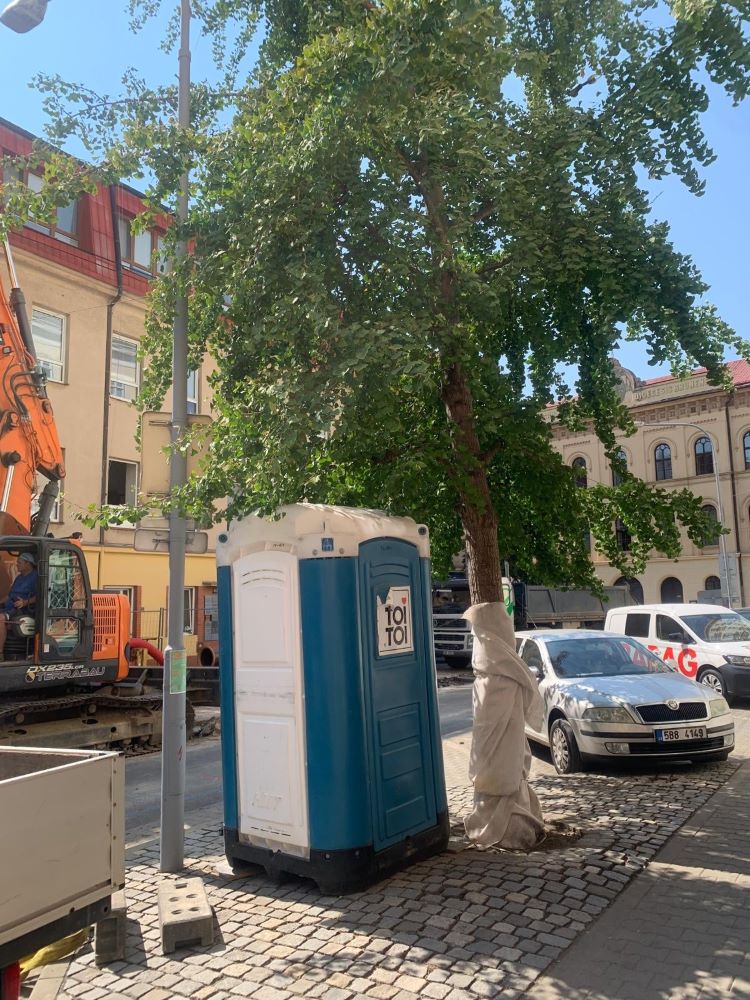
How could it have gone any differently? Only by already being a member of a registered civic association (‘spolek’) with formal standing to participate in the proceedings from the start. Ordinary residents, however directly affected, have no such standing under the law as it currently works in practice. That isn’t a technicality or bad luck: it’s a system in which the people who will live with the result are structurally locked out of the process until after it’s already over. Residents say this is the part they intend to keep pushing on publicly, regardless of what happens to this particular tree — the right of people to know, in time to act, what’s being decided about the street outside their own front door.
The technical case — and its limits
According to the project documentation, the ginkgo’s root system genuinely conflicts with a planned sewer connection, and the tree is due to be felled on that basis; a second tree originally mentioned by the site manager does not, in the end, appear to be part of the authorized felling. In response to a formal freedom-of-information request, BVK — the utility carrying out the works — has since confirmed that alternative technical solutions were reviewed both during the design phase and in the subsequent administrative proceedings, and cites fixed connection points and Brno’s sewer engineering standards as the reason no alternative routing was possible.
What BVK’s same reply refuses to engage with, however, is more telling: residents’ explicit requests for a fresh reassessment of the design, an independent review by the City Architect’s Office and a qualified arborist, and a postponement of the felling pending that review were all declared, in writing, to fall outside the scope of the Freedom of Information Act. In other words, the technical question got a detailed answer; the question of whether anyone independent of the project should be allowed to check that answer did not.
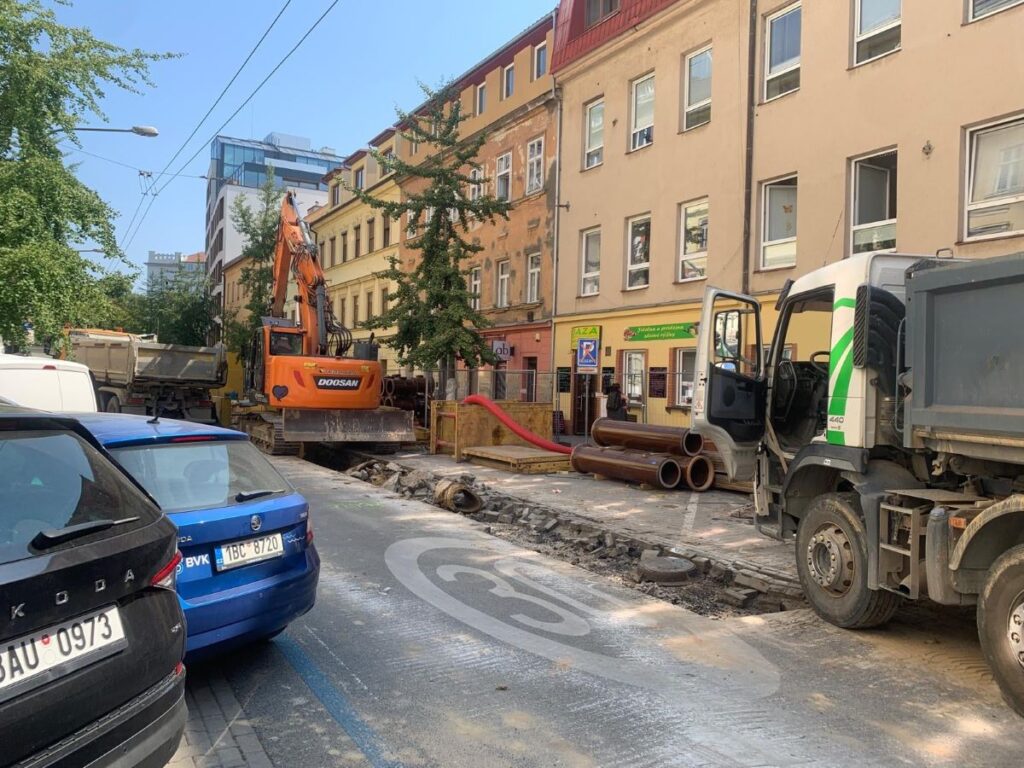
Adding to the sense that the timeline of the felling is driven more by convenience than necessity, the companies that will carry out the rest of the works, including resurfacing the street with asphalt, haven’t been selected yet, because the public tender for that has not yet even been launched. The only part of this project that is moving with real urgency is the one cutting down the tree.
Residents are also not reassured by the promise that the felled trees will be replanted elsewhere in a park. A 20-year-old ginkgo doesn’t relocate. It gets cut down, and a sapling gets planted somewhere else entirely, for a different street, with none of what took two decades to grow. It’s the same kind of reassuring line that, on nearby Haasova — under the same investor, BVK — turned a public promise to fell “just one tree” into a cull that went much further, once root conflicts were “discovered” when work was already underway. The local mayor’s own public account of that episode confirms it: assurances made to residents before construction did not survive contact with the construction itself.
The one thing standing in the way, for now
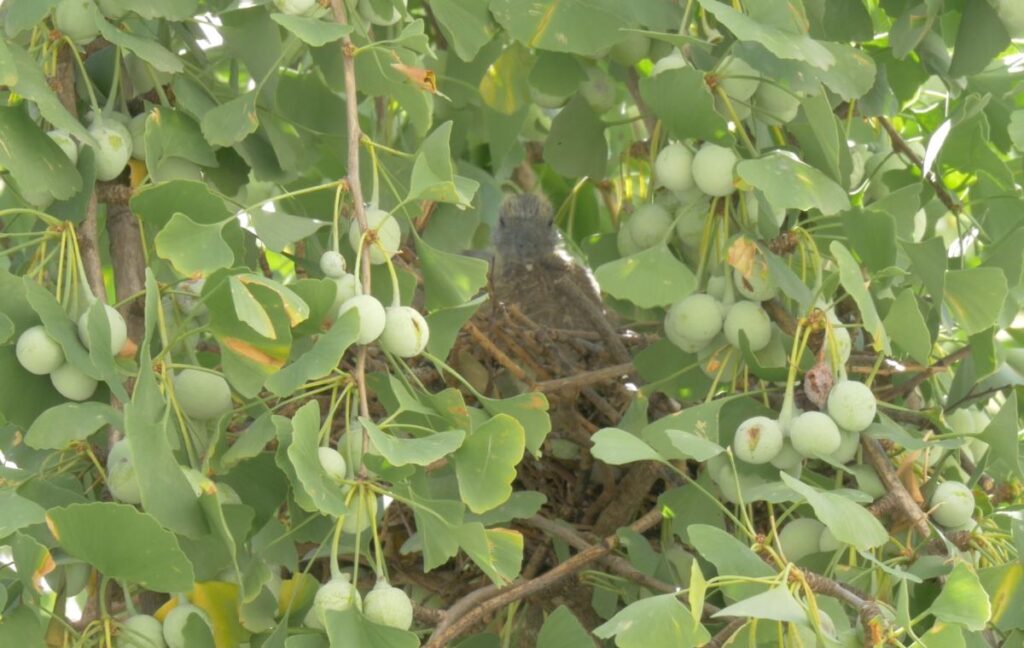
There is, however, one genuine obstacle between the signed permit and the chainsaw, and it isn’t a legal argument the residents are improvising, but one already written into the felling decision itself. The ginkgo currently holds an active nest, roughly seven metres above ground, with a wood pigeon chick not yet able to fly — visibly close to fledging, but not there yet. Under the authority’s own decision, felling in such circumstances must be postponed until the chick has left the nest. That means the permit, however final, and however quietly it became final, cannot be executed while that bird is still sitting in the tree. For now, that is exactly where things stand.
Residents are using the pause to push for their ultimate aim: a genuine, documented review of whether the sewer route could have avoided the ginkgo altogether, and a public account of how a binding decision about a shared, visible piece of the street was allowed to become final without a single one of the people who live there ever being told it was happening. Whatever happens to this one tree, they say, that second question is the one Brno needs to answer before another street finds out about its own missing tree in the same way — by accident, in a construction-site folder, months after it no longer mattered.