


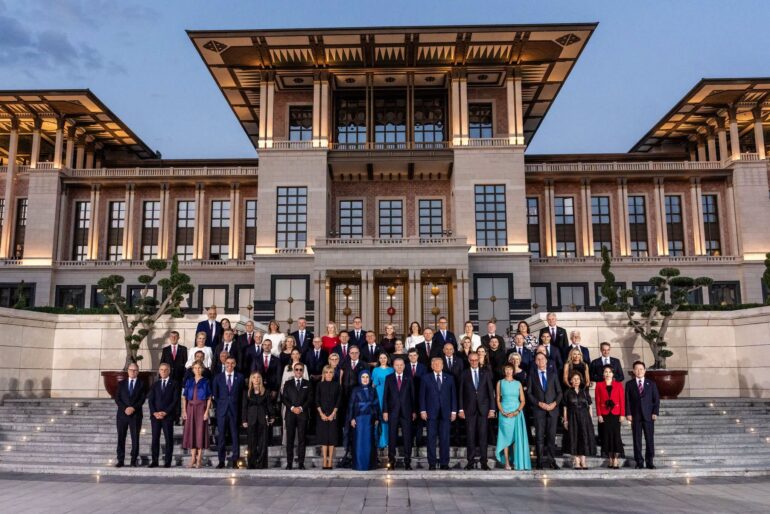

Speaking before his departure from Ankara after the NATO summit, Czech President Petr Pavel told reporters that the allies had maintained the alliance’s unity, agreeing to strengthen their own defences and continue supporting Ukraine.
He praised the constructive atmosphere of the talks, which he said did not correspond to the concerns raised by U.S. President Donald Trump’s previous sharp rhetoric.
“The talks themselves took place in a truly very constructive atmosphere. And at the end, Donald Trump thanked everyone, saying he was very impressed by the spirit in which the talks took place, and apparently thereby acknowledged that the vast majority of allies approached the matter with the utmost responsibility,” Pavel said.
According to the government, the Czech Republic will reach the defence spending target of 2% of GDP, to which the allies have committed, next year.
“If we look at the growth trajectory through 2035, for this to be sustainable, we would need to see a reasonable annual increase in the range of a few tenths of a percent, and that’s not happening,” said Pavel.
He said a document sent to NATO ahead of the summit indicates that a sharp increase in Czech defence spending will not begin until after 2030, which is beyond the term of Andrej Babis’s current government. “Neither NATO nor our allies are so naive as to be unable to calculate whether the growth trajectory is realistic or not,” Pavel said.
Pavel said that he is taking away from the summit a number of ideas for further modernisation of the Czech military and the defence industry. According to him, it will be necessary to adopt legislative changes that will enable faster procurement of military equipment. The current procurement system, governed by the public procurement law, may not meet the army’s future needs due to the length of the processes involved, he said.
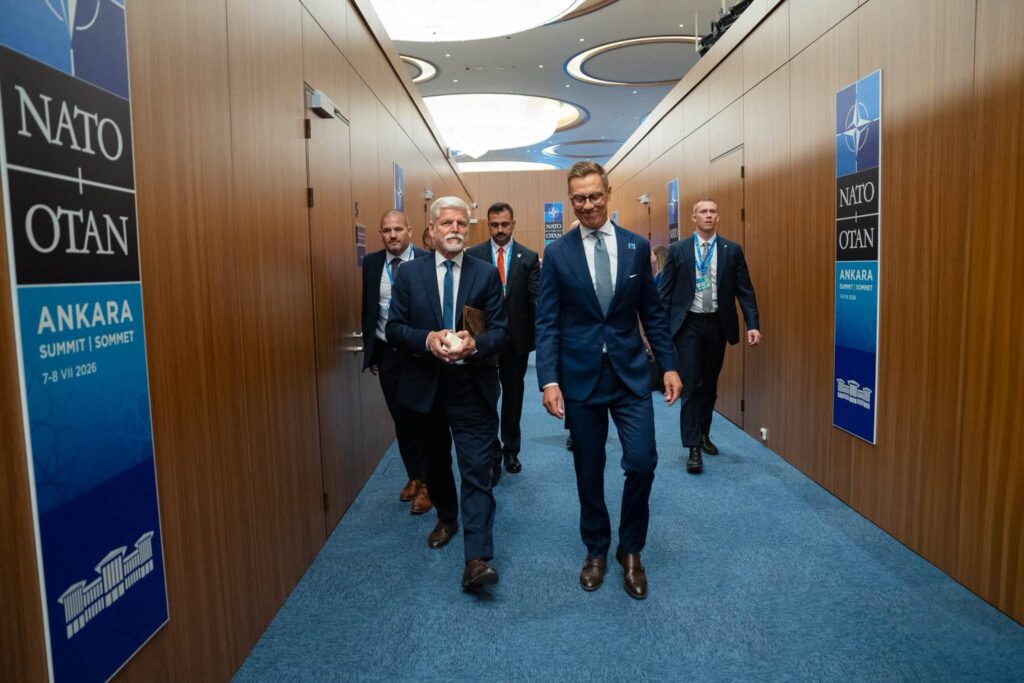
Pavel also noted that the allies reaffirmed their continued support for Ukraine.
“Assistance to Ukraine was also emphasised, not only in financial terms but also in terms of material support,” he said. “Urgent needs were highlighted, particularly regarding anti-ballistic missile and anti-drone systems, as well as the need to continue the ammunition initiative that supplies artillery ammunition.” He added that the goal remains to put pressure on Russia so that it understands that the conflict cannot be won on the battlefield.
The Czech Republic was also represented at the summit by Prime Minister Andrej Babis (ANO), who departed from Ankara earlier in the afternoon and did not communicate much with President Pavel during the summit talks. Before his departure, Babis told reporters that the Czech Republic would not contribute to the 70 billion euro fund for military aid for Ukraine that NATO member states confirmed at the summit.
According to Babis, Europe should focus primarily on research into air defence against ballistic missiles, which he said pose the main problem.
According to President Pavel, it is important to understand that the 70 billion fund is not an additional financial expenditure that would now be put on the table in cash.
“It is the total sum of all aid that has already been partially delivered to Ukraine this year and has already been contracted and pledged,” the president said. The amount will be allocated next year.
“I would consider it fair for us to contribute, even if only a symbolic amount,” Pavel said, adding that this would be primarily a gesture of solidarity, and the amounts do not have to be staggering.