

The Chamber of Deputies yesterday passed a resolution rejecting the holding of the Sudeten German congress in the Czech Republic, initiated by the far-right Freedom and Direct Democracy (SPD), and has called on the organisers to cancel the congress scheduled to be held in Brno from 22-25 May.
The SPD resolution was supported by the MPs of the three parties of the coalition government of Andrej Babis (ANO). Out of the 77 MPs present, 73 voted in support of the resolution. Four MPs abstained: David Kasal, David Prazak, Roman Kubicek (all ANO) and Environment Minister Igor Cerveny (Motorists). Prime Minister Andrej Babis (ANO) and Foreign Minister Petr Macinka (Motorists) did not participate in the vote.
All five opposition parties (ODS, STAN, Pirates, KDU-CSL and TOP 09) boycotted yesterday’s session, in protest against the resolution. On the opposition benches, where the KDU-CSL MPs usually sit, they left a banner reading: “You can’t pay off your debts by inciting hatred.”
“The Chamber of Deputies expresses its opposition to the holding of the 76th Congress of the Sudeten German Association on the territory of the Czech Republic, given the historical context and the fact that certain segments of this community have long held views that call into question the postwar order,” the resolution stated.
The resolution also condemned any “manifestations of historical revisionism”, the relativisation of Nazi crimes, and the questioning of postwar legal and property arrangements in Czechoslovakia.
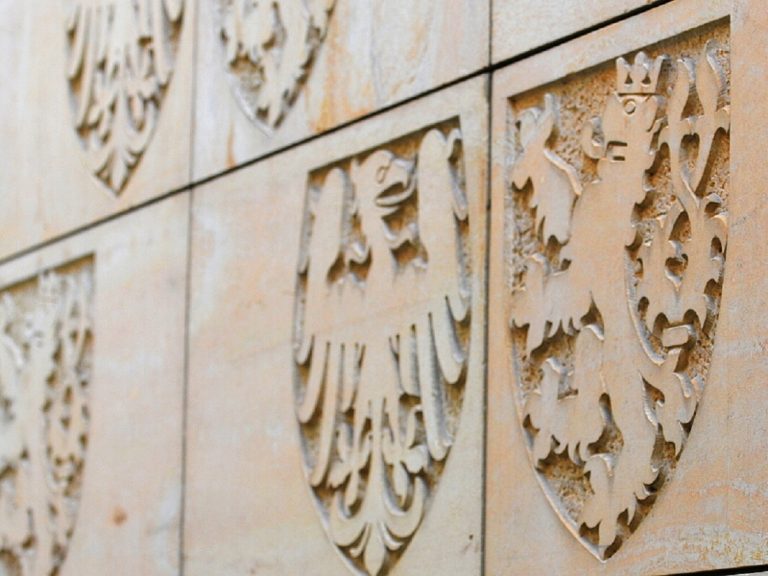
The congress is organised by the Sudeten German Landsmannschaft (SdL), which represents the interests of Germans transferred from Czechoslovakia after World War II and their descendants. This will be the first time the event is taking place in the Czech Republic. The Sudeten Germans were invited to Brno by representatives of Meeting Brno, an association supporting cultural activities.
A number of German politicians are also planning to attend the congress, including Federal Interior Minister Alexander Dobrindt and Bavarian Minister-President Markus Soder. After his speech at the congress, Soder will meet Czech President Petr Pavel in Prague.
“The Chamber of Deputies calls on the organisers of this event, in particular the Meeting Brno association and the leadership of the Sudeten German Landsmannschaft, to refrain from holding it on the territory of the Czech Republic,” states the Chamber’s resolution. Sudeten German leader Bernd Posselt and David Macek of Meeting Brno have already stated that the congress in Brno will go ahead regardless.
Nevertheless, in its resolution, the lower house also highlighted the significance of the 1997 Czech-German Declaration for the development of modern bilateral relations. It noted that the two countries had resolved certain contentious issues regarding their shared past through the declaration.
The lawmakers began discussing the SdL congress last Tuesday, but suspended the debate after more than six hours. Yesterday’s special session, initiated by the coalition, lasted about an hour. The opposition in the Chamber of Deputies argues that the debate on the Sudeten German congress should not have taken place in the lower house at all.
SdL leader Bernd Posselt told CTK yesterday that the resolution in the Czech parliament was “a farce and a caricature of parliamentarianism”, noting that only 73 of the 200 members of parliament voted in favour of the resolution, with 77 present. “The screens showed that the chamber hall was completely empty. The opposition parties – the democratic, pro-European parties that can be taken seriously in the Czech parliament – boycotted it,” he said.
Posselt insisted the congress would be held despite the vote, and that he would respect any peaceful demonstrations by opponents of the congress. He said he was not concerned about any potential violence from opponents. “They are all decent people who will obey the law,” he said. On the other hand, he noted that the congress also enjoys strong support from supporters within Czech civil society and from regional politicians.
In a statement, organisers from the Meeting Brno festival said yesterday that the lower house resolution was “a sign of weakness and fear of one’s own past, not a sign of national pride”. They said Meeting Brno was established as a platform for dialogue and builds on the Declaration of Reconciliation and a Shared Future, adopted by Brno city council in 2015.
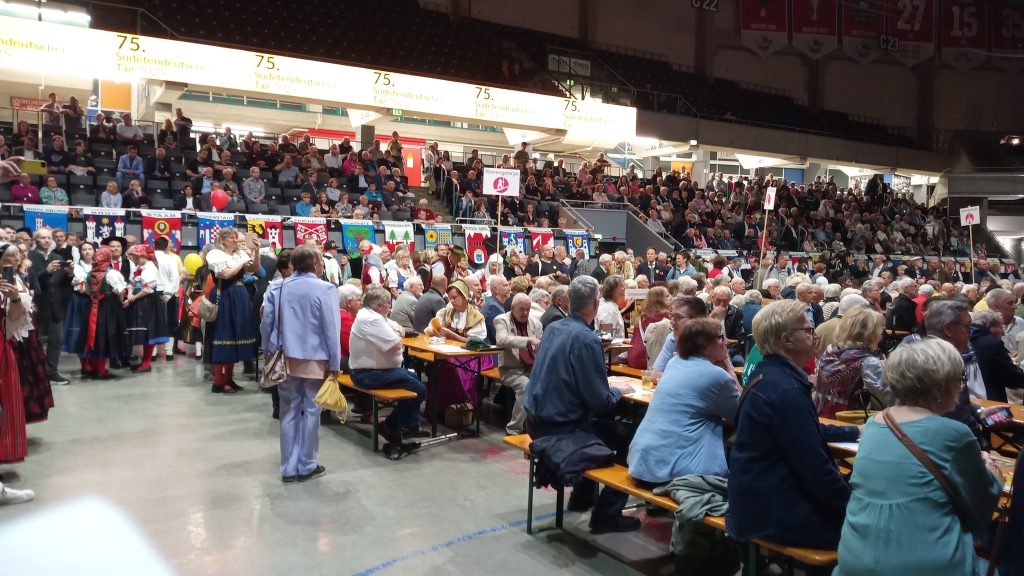
“Our mission remains to foster Czech-German relations through an open and honest reflection on our shared history,” the statement continued. “We believe that personal encounters and the forging of new partnerships are the only way to prevent history from becoming a weapon in the hands of populists. We will continue to strive to make Brno a place where people from all over the world come together.”
Brno Mayor Marketa Vankova (ODS) said the parliamentary debate on the SdL congress was a waste of time and resources that could have been used to further develop relations with Germany. She noted that the Chamber of Deputies has the right to express its opinion, but pointed out that 73 votes for the resolution in a chamber of 200 members was “not exactly a staggering number”. She added that the Meeting Brno festival and the SdL congress continue to have her full support.

South Moravian Governor Jan Grolich (KDU-CSL) described the government’s approach as “obfuscation” and an attempt to provoke a culture war, “so we don’t have to deal with what they mainly want to pass, which is an amendment to the law on budgetary rules.”
Grolich suggested that the government in fact had nothing against the SdL congress. “If they really didn’t want it, they would have discussed it with the German side a few months ago to see if they might change their minds,” he said. “The item under discussion was titled ‘the government coalition’s position,’ so I don’t understand why they didn’t put it to a vote in the government.”
Regional assembly member Michal Dolezel (TOP 09) told CTK that he unequivocally distanced himself from the resolution. “I view the planned gathering of the descendants of former residents, which is primarily intended to be a solemn and conciliatory event, as unequivocally positive in 21st-century Europe,” he said.
Adam Zemek, leader of the Pirate Party in Brno, told CTK that the resolution was a disgrace. “We support the path of reconciliation and believe that 81 years after World War II, we should not be using historical issues for political gain,” Zemek said.
About 3 million Germans were expelled from Czechoslovakia after World War II, mainly from the border regions (Sudetenland). According to a Czech-German commission of historians, between 15,000 and 30,000 people died during the transfer. During the preceding more than six years of Nazi rule, approximately 320,000 to 350,000 inhabitants of the former Czechoslovakia perished.
Relations between the Sudeten Germans and the Czech Republic have improved significantly in recent years, partly thanks to the SdL removing references from its statutes to the return of property confiscated from Sudeten Germans after World War II.
The Czech side has also taken a number of conciliatory steps. One of the most significant was a speech in Munich by Prime Minister Petr Necas in 2013, in which he expressed the Czech Republic’s regret over the injustices inflicted upon Sudeten Germans during the post-war transfer.