

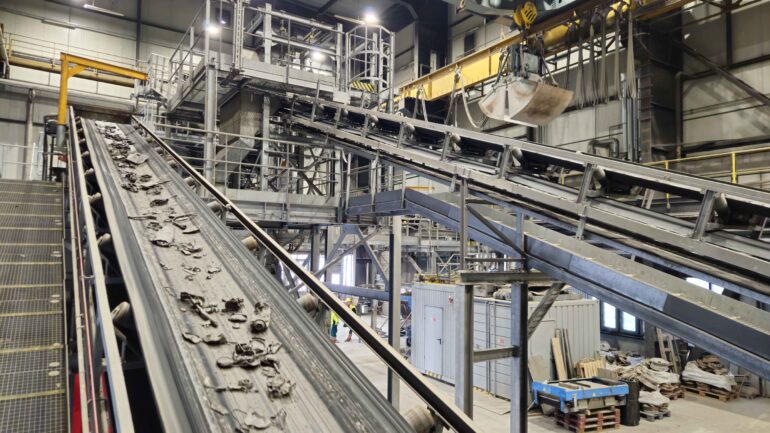

The Brno municipal waste collection company, SAKO Brno, has become the first in the Czech Republic that can sort non-ferrous metals from general waste in its facilities, using a state-of-the-art waste separation line. Ferrous metals are separated using belt and drum magnetic separators, while non-ferrous metals are sorted by separators working on the principle of eddy currents and magnetic field generation.
This line has undergone major investment in recent months, as the company spent CZK 10.5 million upgrading the existing system, which should lead to annual savings of millions of crowns. The improved metal sorting system has successfully passed a three-month trial run and is now in full operation.
As part of the project, the existing equipment was supplemented by a new non-ferrous metal separator which can create a stronger magnetic field. “A neodymium magnet at 3,000 revolutions per minute creates a field that magnetizes even very small non-ferrous materials,” said Pavel Urubek, chair of the SAKO Brno Board of Directors.
The separation system for ferrous metals was also made more efficient by the installation of a very strong belt magnet.
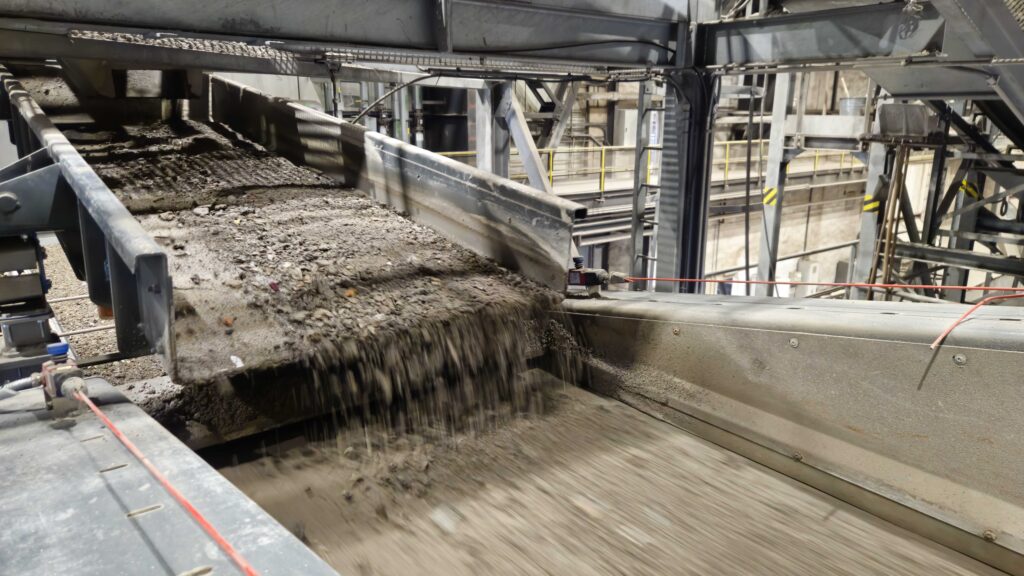
Credit: SAKO Brno
“We strategically placed it so that there were no blind spots between the magnet and the line, and the ferrite magnet pulled out even very small iron from the slag stream. The test operation proved that the magnet is able to capture materials as small as a few millimeters,” said Urubek.

The magnetic drums in the ferromagnetic part of the line were also replaced. “The new drums generate a stronger magnetic field and are designed to facilitate service interventions,” said Urubek.
SAKO Brno has not yet finished upgrading the metal sorting process. The company is already preparing another project for the separation of non-ferrous metals, to salvage possibly rare metals with high market value.
Although ferrous and non-ferrous metals should be placed in the multi-material yellow container, where they are sorted precisely by the country’s first automated line for sorted waste, mixed municipal waste is composed of approximately 2.5% of metals that do not burn and remain part of the slag, from which they are subsequently separated and sent for recycling. This amounts to approximately 4,000 tons of iron and around 400 tons of non-ferrous metals annually.