


I arrived in this country 15 years ago. In Brno, I learned about the influence of classical music in Moravia, the alternative music and art scene in Czechoslovakia before the revolution, and the modern and urban music genres bubbling all around, but if you asked me about the current music scene in Praha, I could not have answered.
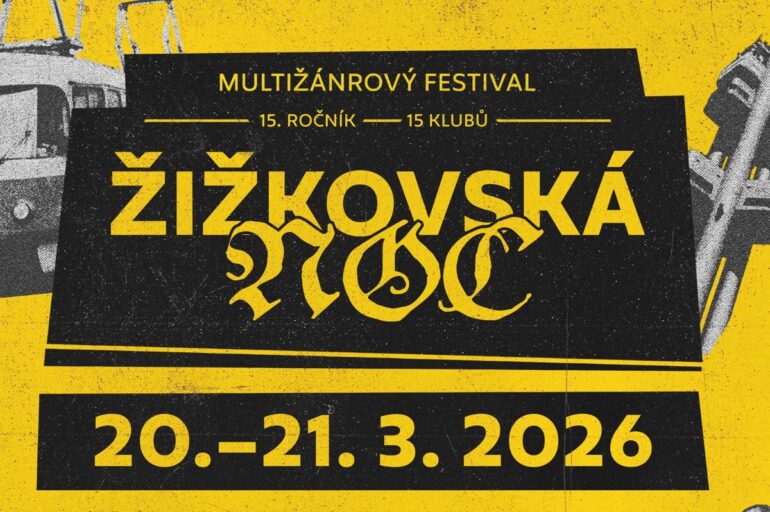
But 15 years ago was also the year that the Žižkov Noc festival began, a city festival in the capital focused on one of its most vibrant artistic districts, Žižkov, sometimes called the little republic inside Prague. This weekend, the 15th edition of the festival promises a journey into the cutting edge of new and independent music emerging in the Czech scene.
In the jungle of ever more expensive events and the emergence of Prague as a clubbing capital, the very existence of such an event, resisting all current trends, always over the first weekend of spring, is a challenge, but one that is ongoing and important to maintain. There are three characteristics that make this event unique.
1. Be social, be Žižkov
The first thing is its affordability, in a city and country which is going through economic and cultural expansion, and a rising cost of living, especially in Prague but not only. Many events now, even the smaller ones, can easily charge around CZK 200 for entry. Free events are now rare, and the music business, constantly growing in Central Europe, clubbing, concerts and festivals included, shows no sign of lifting the pressure on event prices.
In that context, Žižkov Noc offers 150 bands or artists in 15 different venues for a combined weekend price of CZK 399. It’s difficult to find better value.
The map of the venues sheds more light on this offer, with everything in one area within walking distance, stretching from behind Prague’s main station to Hartigova, Seifertova, along the vibrant beat of the Praha 3 district. Still composed of middle-class residential buildings, but now with an increasingly mixed crowd of foreign nationals, refugees and others, Žižkov is a social laboratory, predicting what not only the capital but also the country itself will become over the next decades.
It is a district where alternative bars and micro clubs are spreading, surviving and evolving, still drawing new and interesting artists to play.
2. Be musical, be modern
I could go into more detail about the bands playing this festival and highlight the ones not to miss, but it’s probably easier to say that the festival in general is perfectly adapted to the music scene of today, with a truly diverse range of genres present: rock, post punk, punk, rap, lo-fi, hardcore, metal, reggae, electro, alt pop, psychedelic, and so on. And with so many new and little-known names, maybe the best approach is just to dip in and find out.

3. Be independent, be real
How many festivals do you know that have remained authentic, operating with support from the government or the city? For Žižkov Noc, private sponsors are avoided, and the whole event takes place under the 3-letter acronym that says a lot: DIY.
Being authentic, even by offering tickets to kids from the neighborhood who can’t afford to get in otherwise, is one more principle that the festival aims to maintain: a musically open space, where social classes are erased by the magic of music, art, and innovation. This approach is priceless at a time of hyperactive music consumption and the loss of a real message, as reel content is continuously invading our reality.
You can find out more about the festival and the full programme here.