


Archaeologists have uncovered a rare 15,000-year-old engraving of a horse in the Švédův stůl Cave in the Moravian Karst, a discovery that is reshaping the understanding of Magdelanian art in Central Europe. The find, led by scientists from the Institute of Archaeology of the Czech Academy of Sciences in Brno, provides conclusive evidence that figurative cave art was not limited to Western Europe, as long assumed.
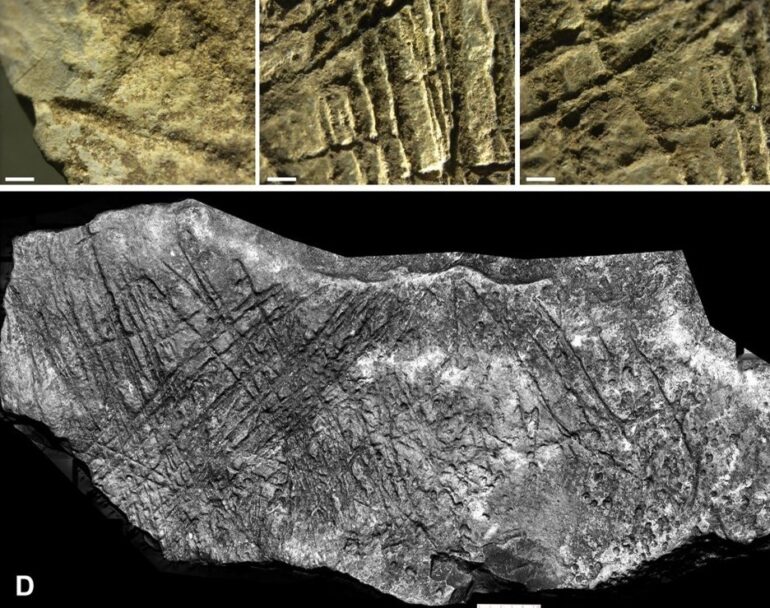
The discovery consists of an engraved limestone block depicting the head and neck of a horse. Originally part of the cave wall, the block became detached through natural processes and was later recovered during archaeological research. According to researchers, it represents a rare example of Magdalenian art dating to the late phase of the last Ice Age, approximately 15,000 to 14,000 years ago.
The find is particularly significant because it serves as indirect evidence of parietal (wall-based) cave art in the Czech Republic, which has not been conclusively documented until now. While portable Ice Age art objects are known from the region, intact cave engravings have remained elusive.
Researchers identified engravings on two adjacent surfaces of the stone, with some of the horse motifs later overlaid by additional engraved lines. This practice of reworking or partially obscuring images is well documented in Magdalenian art and is often interpreted as having symbolic or ritual significance.
“Importantly, this is not a typical portable object, but a fragment of a cave wall,” said archaeologist Petr Škrdla, one of the study’s lead authors. “This raises the question of whether the engravings were created while the block was still part of the cave wall or after it had broken away.”

Detailed archaeological, microscopic and petrological analyses confirmed that the limestone originated directly from the Švédův stůl Cave and that the engravings were made using stone tools characteristic of Magdalenian culture. Horses were among the most important animals of the era, both as a food source and as a powerful symbolic motif, making their repeated appearance in prehistoric art particularly significant.
The discovery places Moravia firmly within the broader cultural landscape of Ice Age Europe, demonstrating that Magdalenian groups in Central Europe shared artistic traditions with their counterparts in the west. The findings were published in the Journal of Paleolithic Archaeology and are the result of collaboration between Czech and Australian researchers.