
The Meeting Brno festival has today launched a petition in support of the idea of holding a meeting of the Sudeten German Compatriot Association in Brno next year, festival co-founder Petr Kalousek told journalists.
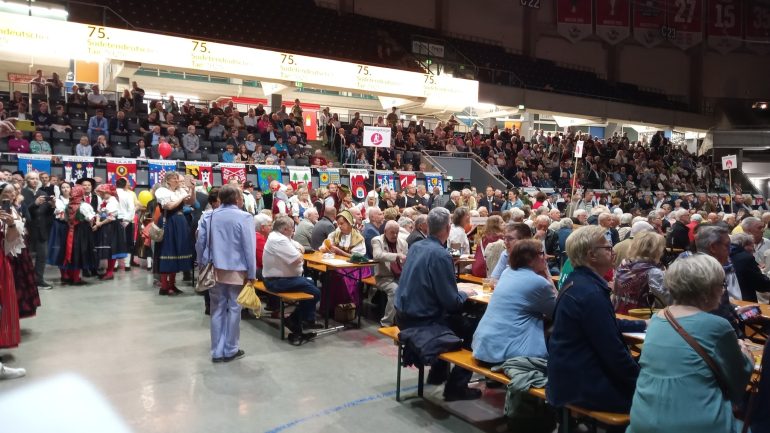
It would be the first such event in the Czech Republic, as until now Sudeten German meetings have usually been held in Bavaria, in recent years also with the participation of guests from the Czech Republic. The idea has already sparked critical reactions, with protests taking place in Prague and Brno in October against a congress on Czech territory, and a declaration of disapproval.
According to today’s press release, the organisers of the festival are aware that the topic is sensitive and are stressing the transparent, respectful and safe conduct of the event. “We are not asking to forget our own history, but rather to remember it,” Kalousek said.
For centuries, Czechs and Germans lived side by side in Brno, until the post-war deportation of the German-speaking population. In 2015, Brno adopted a Declaration of Reconciliation expressing regret over the events of the end of May 1945. Since 2016, the Meeting Brno festival has followed up on the declaration, aiming for open, historically informed dialogue and European reciprocity. The meeting of the compatriot association could form part of its 11th edition.
“We believe that the first such meeting on Czech territory will be another dignified step towards mutual understanding and reconciliation – and Meeting Brno can create an environment where different perspectives meet, while preserving the dignity of all participants,” Kalousek said.
According to the petition, the meeting of the Sudeten German Compatriots Association in Brno should become a meaningful event with overlap for future generations – involving institutions, schools, communities and the public. The petition concludes by expressing the wish that in May 2026, everyone will gather in Brno not as guests and hosts, but as friends and partners writing a new chapter in our common history.

Bernd Posselt, the highest political representative of the Sudeten Germans, has previously described the invitation to Brno as “an incredible honour”, but noted that it is sure to cause controversy.
Around 150 people protested in Prague and Brno at the end of October against a possible congress of Sudeten Germans. They warned against attempts to revise history. Brno City Council also received a “Declaration against a congress of Sudeten Germans in Brno”. “We ask the Brno City Council to stop all steps to organise a congress of the so-called Sudeten Germans, also called Landsmans and falsely by some politicians ‘our compatriots’,” reads the declaration, which is available on the website of the Czech Borderland Club. The club brings together mainly former members, assistants and workers of the Czechoslovak Communist border guards.
Some three million Germans were expelled from Czechoslovakia after the Second World War. According to a Czech-German commission of historians, between 15,000 and 30,000 people lost their lives in the process. During the previous more than six years of Nazi rule, some 320,000 to 350,000 inhabitants of the former Czechoslovakia perished.