

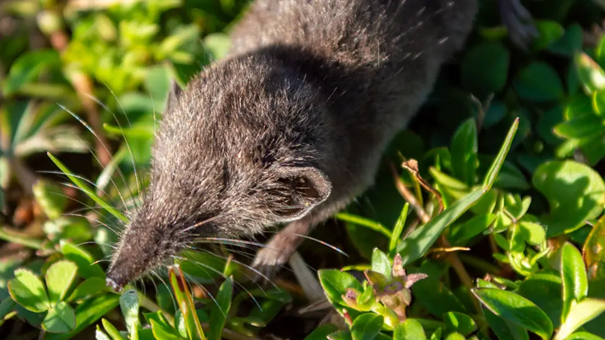

In the rugged mountains of Ethiopia, a team of international researchers led by scientists from the Institute of Vertebrate Biology of the Czech Academy of Sciences has identified one of the smallest mammals on the planet. Weighing a mere 2 to 3 grams, comparable to a single cube of sugar, the newly described Crocidura stanleyi proves that even well-studied animal groups like mammals still hold secrets.
A Decade-Long Scientific Journey
The discovery of this “micro-mammal” began over ten years ago in the Simien Mountains. In 2015, renowned zoologist Bill Stanley of the Field Museum in Chicago first captured a small, shrew-like creature he suspected was unknown to science. Unfortunately, Stanley died shortly after the expedition began, never seeing his hunch officially confirmed.
In the years following his death, Stanley’s colleagues continued his work. By analyzing both new field samples and historical museum materials through high-capacity genetic sequencing, the team finally confirmed the distinct identity of the species. They named it Crocidura stanleyi to honor the late scientist’s lifelong dedication to African mammalogy.
Hidden in Plain Sight
White-toothed shrews are notoriously difficult to study due to their nocturnal habits and similar physical appearances across different species. Crocidura stanleyi is characterized by a slightly flattened head and a short, densely furred tail. At roughly 5 centimeters in length, it is significantly smaller than the Czech Republic’s smallest mammal, the pygmy shrew (Sorex minutus), which weighs about 5 grams.
“The discovery was made possible by the use of special traps, and combining detailed morphological analysis with genetic data,” said Josef Bryja, Director of the Institute of Vertebrate Biology at the Czech Academy of Sciences. He notes that such “hidden diversity” is often found in biologically rich but under-explored regions like the Ethiopian Highlands.

A Call for Conservation
The Ethiopian Highlands are a critical center of biodiversity, split by the Great Rift Valley. The region boasts the highest rate of continental mammal endemism in the Eastern Hemisphere, with nearly 20% of its species found nowhere else on Earth.

However, these unique species are increasingly under threat. “Every newly described species is a reminder of how much biodiversity we still do not know and how easily we can lose it,” warns co-author Yonas Meheretu, an Ethiopian co-author of the study who is now at Umeå University in Sweden. Because these shrews often occupy very small geographic ranges, they are particularly vulnerable to climate change and habitat loss.
The full study has been published in the Journal of Vertebrate Biology, with molecular work conducted at the IVB’s advanced laboratories in Studenec.