


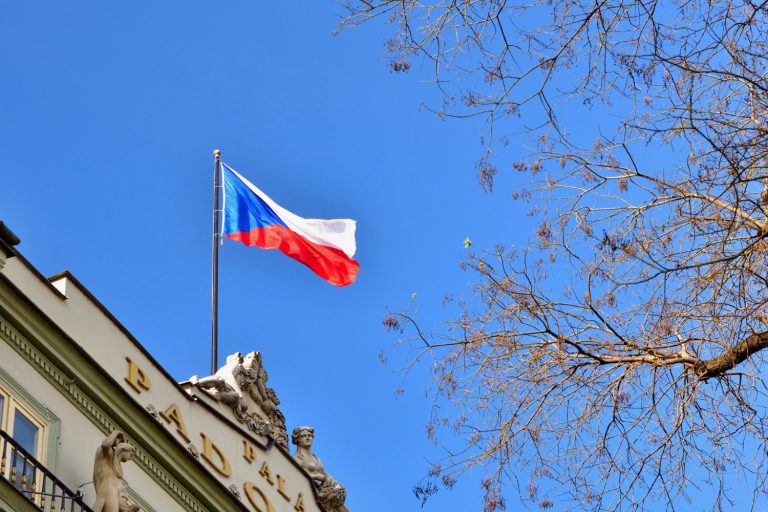

There are over 600,000 Ukrainians now living within the Czech Republic, along with about 40,000 Russians. Brno, in particular, has seen an influx of nationals from these two countries since the Russian invasion of Ukraine in February of 2022.
The increase of foreign nationals has become a significant political issue within the European Union, especially in the Czech Republic. There are constant political battles over whether or not the Czech government should show more support for Russia or Ukraine.
President Petr Pavel has said, “A Russian victory in Ukraine would represent a strategic defeat not only for Kyiv but for all of Europe”, while other politicians have been more critical of Ukraine, such as President of the Chamber of Deputies Tomio Okamura, who said, “Further weapons deliveries would only sustain a senseless war.”
Amid political disagreements over whether support for Ukraine should be enhanced or drawn back, it is the people themselves who have been directly affected by the conflict that has now drawn on for over four years.
Alex, a citizen of Russia, says he left his country before the onset of the war. He could tell that the political and economic situation was getting worse by the day, but the possibility of total war was still completely unthinkable for him. He ended up in Brno, studying, making new friends, and adjusting to his new life in the Czech Republic.
At first, Alex didn’t have many friends in the Czech Republic, but as he began to learn more about the culture and the nuance of the Czech language, it became easier to connect with the local population.
As he settled into his new life, he was free of having to worry about a war going on in his backyard. Alex decided to study politics and media, in part due to the changing situation in his country.
His heart still lies with his family and friends in Russia. Even though he has found peace in his new life in Brno, it is still often difficult to adjust as a Russian citizen.
“When the war started, my bank card stopped working,” he said. He added that many Russians, including himself, found it difficult to get into a university to study for a tech-related degree in the Czech Republic.
While Alex’s story provides insight into what it’s like being a young Russian living in the Czech Republic, perspectives such as Helen’s provide another outlook.
Helen is a Ukrainian who has lived in Brno since 2021, about one year before the start of the war.
When she first left Ukraine, she studied in Slovakia. She has since gotten a job in Brno, making a living by teaching English to a diverse group of students. Within the classroom, she has made many connections, only growing her appreciation for life in her new country.
“My students have supported me and have shown empathy for my country,” she said.
Helen still holds to her sentiment that questions about the ongoing war often become repetitive. She doesn’t want to constantly think about the conflict, but this becomes difficult given her ties to loved ones still living in Ukraine.
Alina, on the other hand, has connections to loved ones still living in her hometown of Moscow. Upon leaving Russia, she moved to Brno to study. She holds the belief that European education is better than the systems in place in Russia.
Upon completing her education, she moved to Vienna, where she can still enjoy her newfound freedoms within the European Union. She finds it easier to voice her ideas now that she is not living under what she calls, “the suppression of the Russian government.”
She also drew comparisons between the social norms of living in Russia versus the European Union. In Russia, she said, “people have been thrown in jail for displaying LGBT symbols such as rainbow earrings.”
Alina also maintains a deep appreciation for the right to freedom of speech she now possesses in the EU. She appreciates the fact that citizens of the Czech Republic and Austria are able to protest, as opposed to Russia, where she says protesters are often beaten in the streets and/or thrown in jail.
Given some of Alina’s convictions about the hardships of living in Russia, you can see why she decided to leave. Despite this, there are still those who refuse to relocate, and others who have actually gone back to the warzone.
Maryna and Borgs are a couple who currently live in Kyiv, the Ukrainian capital. Although there are often bombings and drone strikes in their city, they have not felt the need to leave.
Although the couple won’t leave their country, they decided to take a trip to Brno to visit some friends who did depart their home countries. Maryna and Borgs feel blessed to be able to vacation in a country like the Czech Republic, as it is far removed from their experiences of drones and bombs flying in the air while they were trying to relax on the beach at home.
Borgs served in the Ukrainian military from 2022-2024 as a field medic. He served in the Donbas region on the front lines, where his job was to deliver wounded soldiers to nurses.
Although Borgs left the military because of an illness, he feels the need to help his friends still in the fight. The same goes for his partner Maryna, who lived in Brno at one point but decided to return to Ukraine as Russian attacks have become more intense.
Both Maryna and Borgs seem to feel a deep connection to their homeland and a desire to fight for its freedom. It is difficult to realize a sense of liberty during wartime, but whether Russian or Ukrainian, everybody seems to desire this highly sought-after quality.
Whether these people have felt the need to move to a new location and begin a new life, or return to their homeland in order to assist with the war effort, one thing remains constant through their stories: that war is brutal, intense, and one of the worst aspects of the human race. That is why their experiences, stories, and emotions are so important to hear – so we can learn from real history.