



The Czech Republic will redirect funds from certain projects to the Priority Ukrainian Requirement List (PURL) initiative, through which allied nations pay for U.S. military equipment for Ukraine, Foreign Minister Petr Macinka (Motorists) said in Prague before departing for the NATO summit in Ankara yesterday.
The coalition government of ANO, Freedom and Direct Democracy (SPD) and the Motorists, elected in late 2025, has so far refused to provide funds for weapons for Ukraine, and does not contribute to the Czech ammunition initiative either, even though it allowed the initiative to continue, contrary to its pre-election statements.
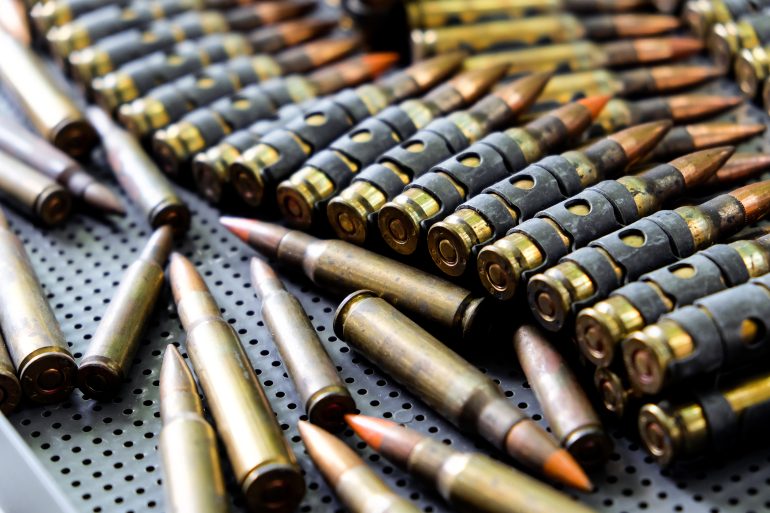
The PURL initiative allows European allies and Canada to purchase ammunition and weapons manufactured in the United States, and subsequently provide them to Ukraine. Participation in the initiative is voluntary for NATO countries. The first countries to join the initiative were the Netherlands, Denmark, Norway, Sweden, Germany and Canada. The Czech Republic is not yet among them, although U.S. officials mention at every meeting that allies should continue with this initiative, according to CTK sources.
“We are now working on redirecting certain projects – which are mandated by our budget for Ukraine – into this PURL programme,” Macinka told reporters yesterday. According to Denik N, he was expected to present the change in the Czech government’s position at the dinner with NATO and Ukrainian foreign ministers last night.
Speaking to the media at the NATO summit in Ankara, Czech President Petr Pavel said the Czech Republic’s intention to join the PURL initiative will send a positive signal. He noted that the allies are seeking to expand the group of countries that are financially contributing to aid for Ukraine. “The Czech Republic was previously one of the few countries that had not signed on to this process at all. So if this goes through now, it is certainly a positive signal,” he said.
However, the far-right SPD strongly opposes the Czech Republic’s participation in the PURL initiative. “This matter was never discussed at the coalition council. It is a decision by the foreign minister,” SPD spokeswoman Lenka Cejkova told CTK yesterday.
A proposal to provide 70 billion euros to Ukraine this year, and at least the same amount next year, is also expected to be discussed in Ankara. Czech Prime Minister Andrej Babis (ANO) previously stated that his government would not block the plan but would not participate in the aid effort. Yesterday he added that the Czech Republic needs the money to fulfill its NATO commitments. According to him, larger countries will pay for it, as they did in the past.
Babis also recalled the coalition agreement stipulating that the government would continue the ammunition initiative launched by the previous government of Petr Fiala (ODS). “But we won’t be putting money from the Czech budget into it, because we’ve simply inherited a budget with a CZK 90 billion shortfall for this year,” he said.
Through this initiative, the Czech Republic facilitates the delivery of large-calibre ammunition to Ukraine, funded by international partners. Babis sharply criticised the initiative before the October 2025 parliamentary elections and promised to cancel it.