


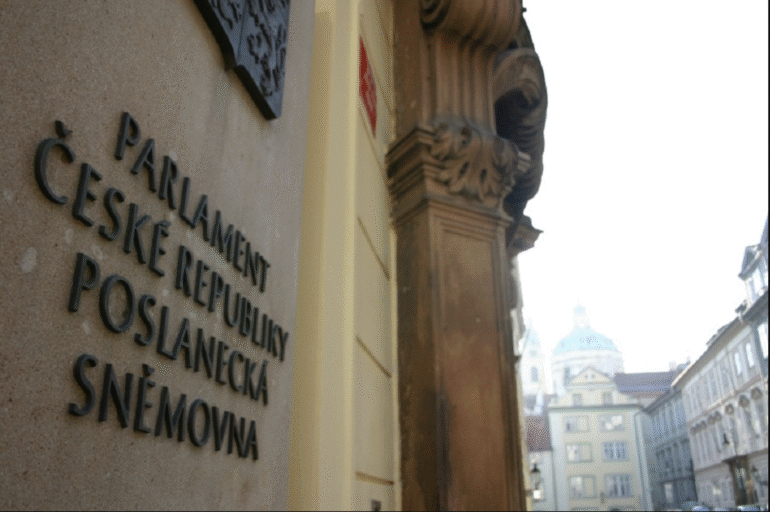

Female lawmakers from all political parties face psychological and sexualised violence, and receive attacks far more personal than those against their male colleagues, according to a study surveying 41 out of 67 female members of the Chamber of Deputies. Some female politicians have curtailed their political activities out of fear of hateful attacks and harassment.
The survey, focused on violence against female lawmakers, was conducted from last November to March this year, and presented at the Forum 50% NGO today.
The situation has not improved compared to 2024, when the research was conducted for the first time.
Four-fifths of those surveyed faced psychological violence. They were the targets of threats, intimidation, verbal abuse, defamation and harassment in cyberspace. Two-fifths of female lawmakers had experienced sexualised violence, specifically unwanted touching or propositions. Nearly one-fifth experienced physical violence, and more than a quarter experienced economic violence, such as having their car or property damaged. Younger female lawmakers encountered these attacks more frequently.
According to the findings, attacks on female lawmakers tend to be much more personal than those directed at their male colleagues. They involve comments about appearance, questioning of competence and threats of rape. One-fifth of the female politicians surveyed stated that, out of fear of hateful attacks and harassment, they had limited their political activities, such as public appearances, media interviews or posting on social media.
According to female lawmakers who served in the Chamber of Deputies during the previous term (2021-2025), the level of insults and hateful comments has increased with the new composition of the lower house. Male lawmakers mock them during speeches in the plenary session and insult them when they meet in the hallways.
“These are even personal insults, compounded by physical superiority if the man is tall,” said Marketa Kos Mottlova, one of the authors of the study. “Moving through the dimly lit corridors of the Chamber is uncomfortable. Female MPs are afraid of who they might encounter face-to-face in the hallways when they are there alone.”
Another author, Barbora Sticka, said that the respondents mentioned the same names of colleagues responsible for the attacks.
Online, the attacks tend to be more intense, organised, and targeted, spreading into disinformation groups. “There is a connection to the ‘manosphere’ phenomenon,” said Sticka. She added that the targets include not only opposition politicians but also those in the ruling coalition. However, the attacks against them are not coordinated or linked to the disinformation scene.
More than a quarter of those surveyed had contacted the police due to threats of violence. In the case of economic attacks, this figure was nearly two-thirds of female politicians.
The authors of the study recommend establishing an independent institution and setting up procedures for reporting and resolving cases, as well as amendments to the Chamber of Deputies’ code of ethics, awareness-raising, and education. Forum 50% plans to seek to involve politicians in the solution.
Forum 50% collaborated on the research with the Prague office of the Friedrich Ebert Foundation. In conducting the research, it followed the procedures of the Inter-Parliamentary Union.