


Researchers from the Czech Academy of Sciences have developed an artificial intelligence model that can identify parasitic bird eggs with far greater accuracy than human experts. The breakthrough, achieved by scientists at the Institute of Vertebrate Biology of the Czech Academy of Science (ÚBO AV ČR), in collaboration with colleagues in the United Kingdom, could transform the study of an elusive reproductive strategy found across many bird species.
The findings, published in Proceedings of the Royal Society B, address a long-standing challenge in ornithology: recognising parasitic eggs laid by other females of the same species. Unlike the well-known brood parasitism of the common cuckoo, where eggs noticeably differ from those of the host, intraspecies parasitism is far more subtle. Identifying an “intruder” egg by eye is notoriously difficult, even for trained ornithologists, meaning that studies have relied mostly on expensive and time-consuming genetic testing.
To overcome this, the Brno-led team trained a machine-learning model using 270 eggs from 54 female barn swallows (Hirundo rustica), a species in which intraspecies parasitism has already been documented. The model analysed key visual traits including size, shape, colouration and spotting patterns, and then tested its accuracy on nearly 2,000 simulated clutches.
Artificial intelligence was able to correctly identify the parasitic egg in 97% of cases. Human participants, including experienced ornithologists, averaged 87%.
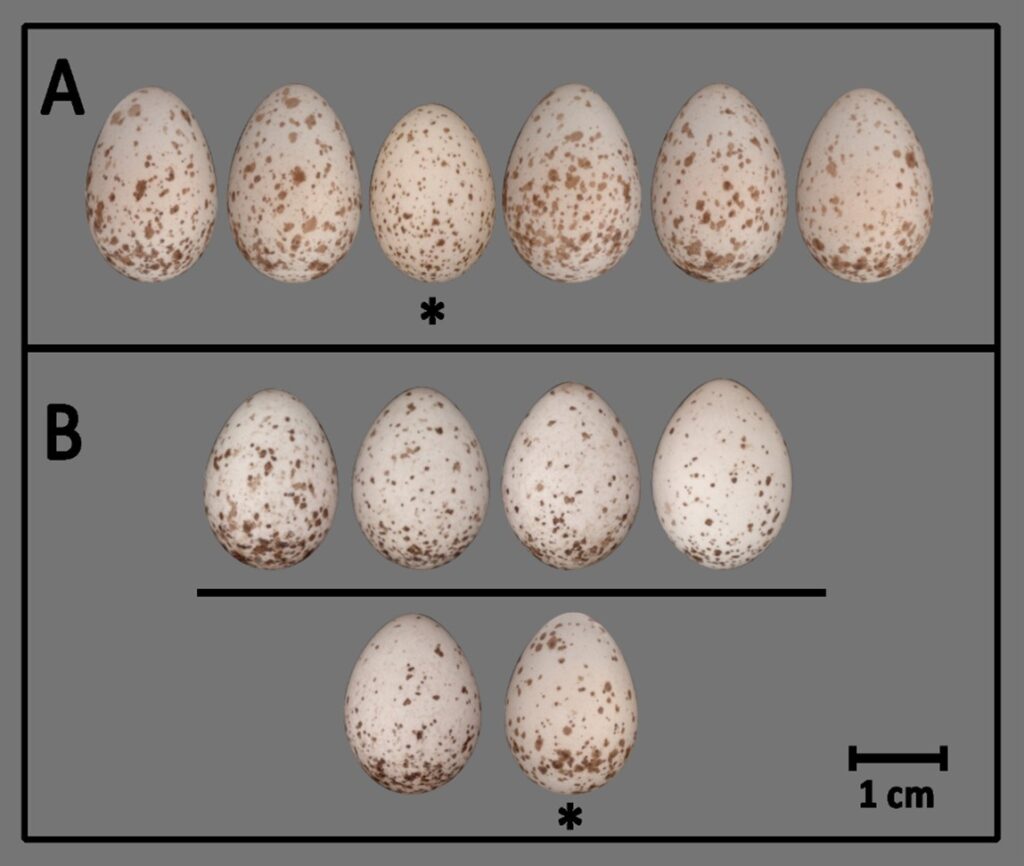
Because the model requires only digital images, the researchers say it could dramatically speed up and expand future studies. They have also chosen to openly release the method and instructions, allowing other teams to apply the tool to different species or datasets.
Understanding intraspecies parasitism is important for explaining the reproductive strategies of many birds, from ducks and sparrows to starlings. The new tool could finally allow scientists to study this widespread yet understudied behaviour at scale.

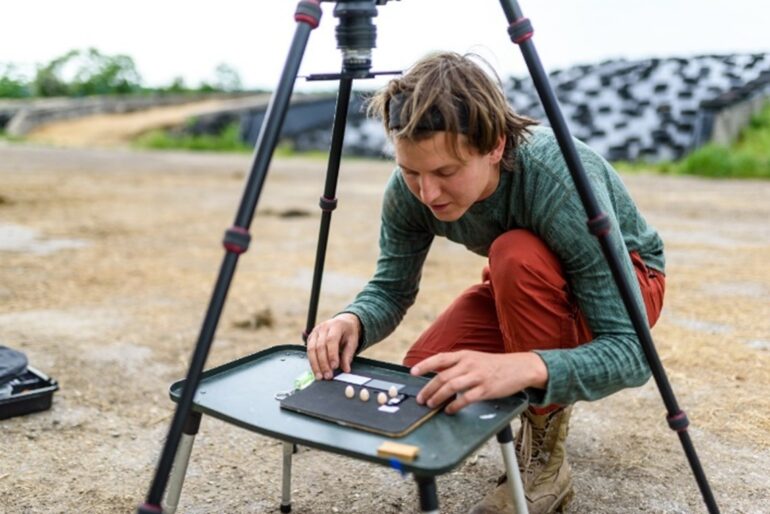
The research was conducted on barn swallow populations nesting in agricultural buildings in the Třeboň region of South Bohemia, where scientists monitored clutches and photographed eggs in the field—an activity that takes only a few minutes and does not disturb the birds.
The project highlights growing opportunities to use AI in ecological research, offering a faster, cheaper alternative to traditional laboratory methods and opening the door to deeper insight into the hidden dynamics within bird communities.
For more information, see the original publication here.