


As the Czech documentary festival turns thirty, it is asking the question every documentary filmmaker now has to face. Ahead of this week’s festival opening, Brno Daily’s Emanuele Ruggiero reflects on the challenge posed to documentary film by the advent of artificial intelligence, one of the major themes of this year’s Ji.hlava IDFF.
I have been making films since 1990. For most of that time, the contract between a documentary and its audience was simple, even when it was naive: what the camera recorded had happened. You could argue about framing, editing, omission, manipulation — and we always did — but the raw image itself was evidence of something.
That contract is now broken, and the people who run one of Europe’s most important documentary festivals are saying so out loud.
When the Ji.hlava International Documentary Film Festival unveiled its 30th edition in September, festival director Marek Hovorka did not open with box-office records or premiere counts. He opened with a warning. A year ago, he said, we could still believe that documentary was by its nature sheltered from artificial intelligence. Today those tools can produce a shot that no viewer can tell apart from an authentic recording. What will a documentary image mean, he asked, once its relationship to reality is no longer self-evident — and what will trust between filmmakers and audiences be built on?
I cannot think of a better question to bring to Jihlava this year. The festival runs from 23 October to 1 November, and reading through its programme, I find that almost every strand of it, intentionally or not, answers that question from a different angle.
When films were proof
The anniversary’s centrepiece is a section called Films That Changed the World: thirteen documentaries whose impact reached courtrooms, parliaments and boardrooms. It reads like a reminder of what is at stake.
Errol Morris’s The Thin Blue Line (1988) did not just tell the story of Randall Dale Adams; it dismantled the case that had put him on death row, and within a year he walked free. Noriaki Tsuchimoto’s Minamata (1971) stood beside the victims of mercury poisoning as they forced their way into the shareholders’ meeting of the company responsible. Rithy Panh’s S21 (2003) placed former Khmer Rouge guards back inside the prison where they had tortured, and let their own gestures convict them. Edward R. Murrow and David Lowe’s Harvest of Shame (1960) shamed America into legislating for migrant farmworkers.
There is a Czechoslovak entry too, and it moved me to learn about it: Kurt Goldberger’s Children Without Love (1963), made with psychologist Zdeněk Matějček, which exposed the emotional damage done to infants in weekly state nurseries and helped extend maternity leave.
Every one of these films worked because people believed the images were real. That is the uncomfortable thought the section leaves you with: if that belief erodes, the next Thin Blue Line may simply be dismissed as fake.
The filmmaker who never trusted the image
And yet Ji.hlava, characteristically, refuses to make it that simple. Alongside the films that served as proof, the festival presents a retrospective of Trinh T. Minh-ha, the Vietnamese-American filmmaker and theorist who spent her career attacking precisely the documentary’s claim to objectivity. Reassemblage (1982), shot in Senegal, rejects the ethnographer’s authoritative voice; Surname Viet Given Name Nam (1989) stages its “testimonies” to expose how easily we accept what is framed as truth.
Putting Trinh next to Morris and Tsuchimoto is, to me, the smartest programming decision of the year. Her films suggest that documentary’s authority never came from the image alone. It came from the honesty of the method and the relationship between the person filming and the people filmed. That may be the ground we have to rebuild trust on now. Trinh will be in Jihlava in person to give a masterclass, and I will be in the room.
Images of images
The new films in competition make the same point from the present tense. Several of them are not about events so much as about how we see events through screens.
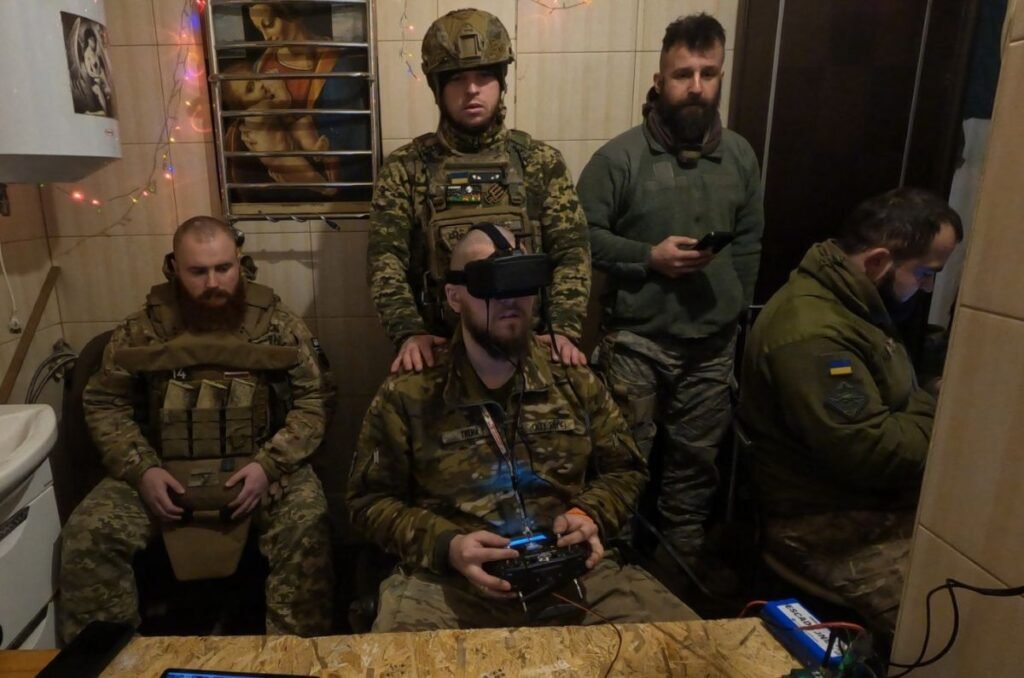
In the international competition Opus Bonum (14 films), Yevhen Titarenko follows a Ukrainian drone unit for whom war is fought on monitors, where death shrinks to a few pixels (I See No Death). In the Constellations section, Palestinian director Kamal Aljafari watches television news from Gaza in his parents’ house and turns the broadcast footage into something closer to a home movie, asking what endless images of violence have actually changed. In Testimonies, Chouwa Liang’s Replica meets young Chinese women who choose AI-generated partners over real ones. At the Inspiration Forum, Samaneh Moafi of Forensic Architecture will show how video, satellite imagery and 3D models can reconstruct events that power would rather deny — a kind of documentary that rebuilds trust through verifiable method rather than a single image.
Even the festival’s own birthday film plays with the theme. Ji.hlava 30: Thinking Through Film, edited by Andrea Slováková and Janka Vlčková from nearly a hundred hours of archive, gathers filmmakers like Frederick Wiseman, Béla Tarr, Jørgen Leth and Viktor Kossakovsky reflecting on their craft. Its six chapters will play as shorts before selected screenings: thirty years of people thinking aloud about what a documentary is.
What I will be watching
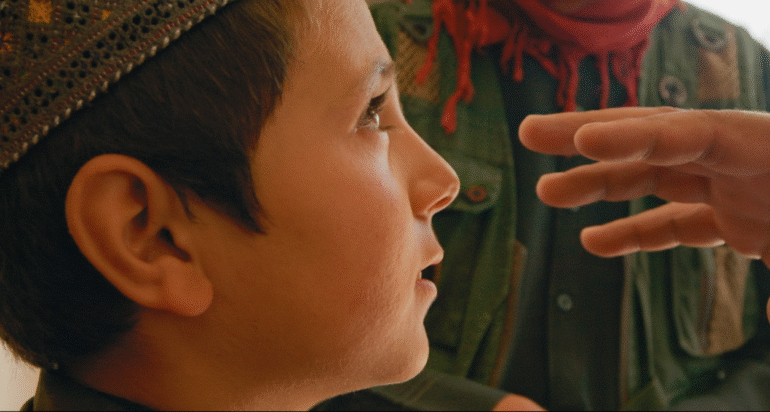
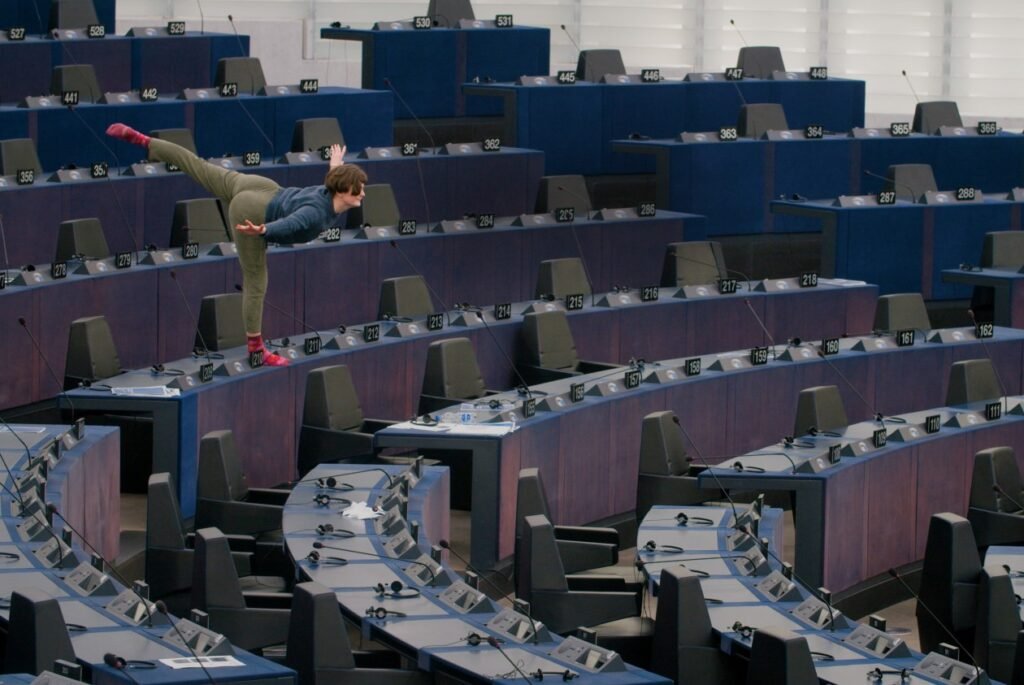
With more than 350 films, every visitor builds a different festival. Mine will include James Longley’s Mohabat, about an Afghan boy growing up in an orphanage after a drone strike killed his father; Baltic UXO, on the 1.6 million tonnes of munitions still lying under the Baltic and North Seas; and Dear Fellow Citizens by Andrea Culková, which spent five years with ordinary Europeans chosen by lottery to deliberate inside the European Parliament.
From the Czech Joy competition, which this year has 27 new Czech documentaries and the strongest Czech presence ever in the international sections, I am curious about Jan Novák’s decade-long chronicle of a village rabbit breeders’ club — probably the most Czech premise imaginable — and Filip Remunda’s portrait of photographer Vlastimil Kula and his daughter, a film about the cost an artist’s work imposes on those closest to him. As a filmmaker who has spent years in Central Europe, I will also make time for Sára Prokopová’s film about employees of Slovakia’s public broadcaster resisting political pressure. It is a story about who gets to control the images a country sees of itself.
Outside the cinema, the Inspiration Forum’s new Big Talks open the main hall to the public for the first time: philosopher Lea Ypi on 24 October, climate comedian Matt Winning on 25 October, Camila Vergara and Samuel Bagg on the power of oligarchs on 30 October, and David Wengrow, co-author of The Dawn of Everything, on 31 October.
Where the next films are born
For those who produce documentaries, Ji.hlava is also a workplace. From 27 to 30 October the industry programme expects more than 1,200 professionals and some 800 one-to-one meetings. The New Visions Forum will pitch 28 projects, with Montenegro as this year’s focus country, and the New Visions Market adds 18 more. These meetings rarely make headlines, but many of the films we will be arguing about in Jihlava in three or four years will start there.
Thirty years in
Over three decades the festival has screened nearly 6,400 films to about 940,000 viewers; the millionth will probably walk through the door this autumn. Hovorka says he has felt for years that documentary is living through a golden age. I agree, but golden ages are also when the stakes are highest.
If audiences can no longer take the image on faith, then what they will need to trust is the filmmaker: the method, the relationship, the time spent, the ethics. That is what Ji.hlava has been defending for thirty years. This year it seems to know that the defence has never mattered more.
_______
30th Ji.hlava International Documentary Film Festival · Jihlava, Czech Republic · 23 October – 1 November 2026 · Industry Days 27–30 October · ji-hlava.com
Emanuele Ruggiero is a filmmaker and the founder of KINOVISION, based in Brno.