


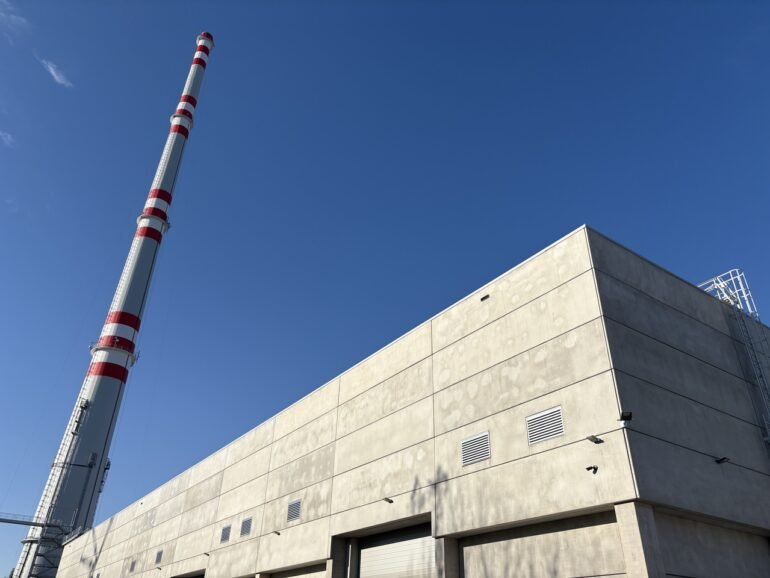

The City of Brno is adding a new source of heat and electricity, in the form of wood biomass. Last week, Teplárny Brno ceremonially opened the modernized Brno-sever biomass power facility in Maloměřice. The investment of approximately CZK 2.7 billion is one of the most significant energy projects of the city in recent years. The new biomass energy source will help reduce the consumption of natural gas for heat production by approximately 15%, strengthen Brno’s energy security, and could reduce CO₂ emissions by up to 38,000 tons per year if fully utilized. Along with the proposed heat pipeline to Brno from the Dukovany power plant, the new facility forms part of the City of Brno’s strategy to develop a stable, diversified power infrastructure.
The construction of the new biomass source began in May 2023 after several years of comprehensive preparation. The modernization followed the gradual winding down of operation of the original K13 and K14 oil-gas boilers, dating from the 1980s. The new technology, with a thermal output of 43 MW, uses wood chips, and simultaneously produces electricity through a backpressure steam turbine with a generator. It can supply approximately 500,000 GJ of heat to the Brno power system every year, but will only operate during the winter season, as the heat from Brno’s waste incinerators is sufficient during the summer.
“The new source expands and at the same time diversifies the composition of technologies on which Brno’s heat supply is built,” said Brno Mayor Markéta Vaňková. “Teplárny Brno supplies heat to more than 100,000 households, as well as hospitals, schools, universities and administrative and industrial buildings. In addition to the reliability and predictability of supplies, the ability to use local and low-emission sources and flexibly respond to the development of the energy market is playing an increasingly important role.”
The heart of the facility is a new wood biomass boiler, supplemented by cogeneration electricity production. At the same time, a new fuel warehouse was built, and a railway siding and a heating water accumulator with a volume of 3,500 m³ were reconstructed.
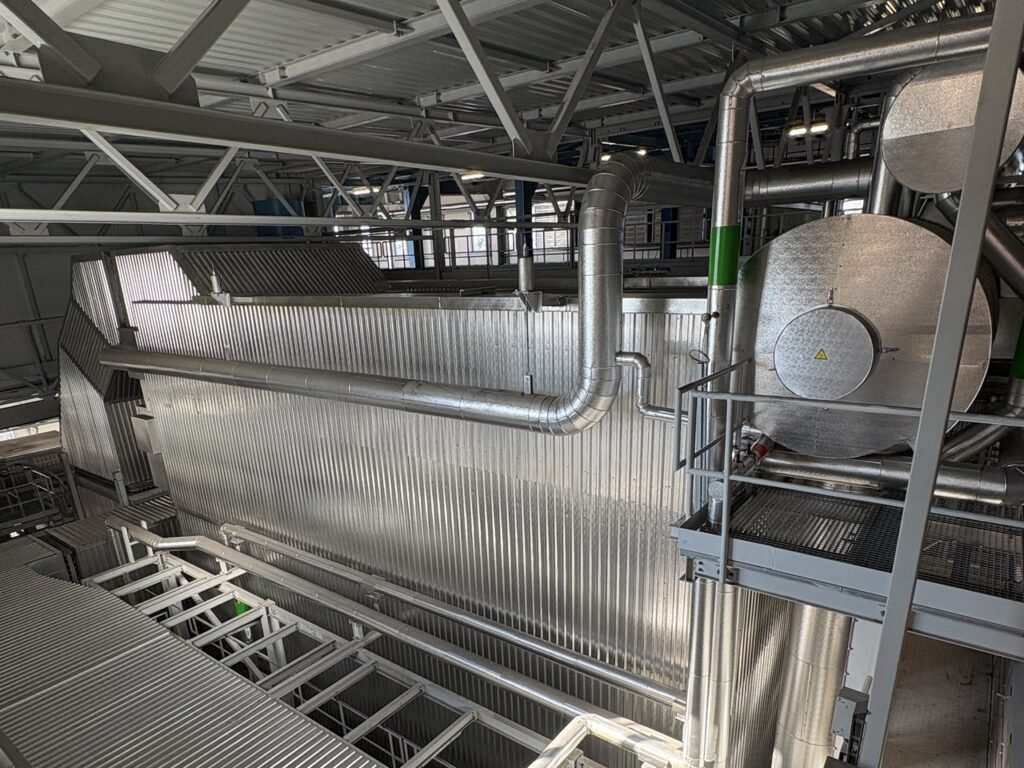
The work also involved the modernisation of technological distribution systems and extensive repairs to the 217.5-metre chimney – the tallest structure in Brno and the 9th tallest chimney in the Czech Republic.
“Before we decided on biomass, we assessed a number of options and looked for a solution that would make sense not only today, but also in ten or twenty years,” said CEO of Teplárny Brno Petr Fajmon. “The new source allows us to replace a significant part of natural gas with local biomass, and it actually already participated in the production of heating, in a test operation during the last heating season. At a time when the energy market is still experiencing significant fluctuations, less dependence on natural gas is very important for our system.”
“It is projects like this that decide what the city’s energy system will look like in the future,” added Jiří Herman, chair of the board of directors at Teplárny Brno. “We want it to be modern, reliable and gradually less dependent on fossil fuels.”
The total cost of the modernization amounted to approximately CZK 2.7 billion, partly covered by a contribution of CZK 1.661 billion from the Modernization Fund. The project was carried out by a consortium of Engineering Praha, who were responsible for the technological elements, and OHLA ŽS, responsible for the construction.
In 2026, the project received the Crystal Chimney award in the category of decarbonization of heating sources, awarded by the Czech Heating Association.
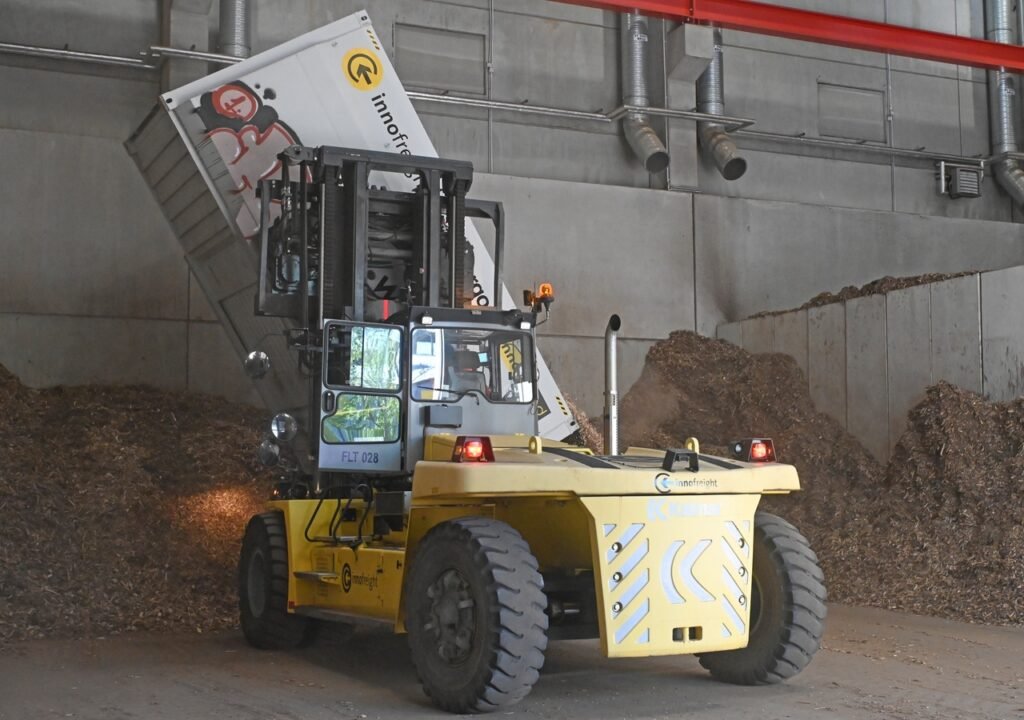
The exclusive supplier of energy wood chips is the City of Brno Forests, who are expecting to deliver approximately 80,000 tons of biomass during the heating season, transported to Maloměřice entirely by rail.
The first train with wood chips arrived at the site in October 2025. One train can replace approximately 30 trucks that would otherwise have to travel through the local area. Using rail therefore minimises traffic congestion, noise and dust in the vicinity of the site.
The source completed approximately 3,000 operating hours during a test session in the 2025/2026 heating season, saving approximately 15,000 tons of CO2 compared to production from natural gas.
The new biomass power source is part of Teplarny Brno’s long-term efforts to diversify the sources of power in the city’s energy sector, which have also included reclaiming heat from the incineration of waste, installing solar power stations on city buildings, and increasing connectivity through the entire energy chain, including other municipal companies.
The next key step in the diversification of the city’s power sources will be the heat pipeline connecting Brno with the Dukovany nuclear power station. After that, it is hoped that the share of natural gas in the city’s power use will drop to around 5-7%.