


At the beginning of January 2026, the 20th expedition of Masaryk University will set off to Antarctica. In addition to scientific research, the mission will also include a significant modernization of the medical equipment of the J.G. Mendel Czech Scientific Station on James Ross Island.
The new medical technology making its way to Antarctica with the team will include an automatic external defibrillator, a vital signs monitor with accessories, an ultrasound with a convex probe, and various other small medical instruments and medicine stocks. Masaryk University (MUNI) acquired the equipment for just under CZK 1 million thanks to Dr. Bronislav Stibor and the companies Gordic, BIONIK Stapro Group, Cheiron, Plasmametal, Stolařství Jana Záviška, and the Czech Antarctic Endowment Fund.
In terms of its scope and capacity, the new equipment for the JG Mendel polar station surpasses not only seasonal stations, but also many stations inhabited year-round. MUNI plans to continue modernizing the station in the coming years. The polar station has been operated by MUNI since 2007.
“The modernized medical equipment significantly increases the level of care provided at the station and will strengthen the ability of the expedition doctor to respond to unexpected situations in the challenging conditions of Antarctica,” said MUNI Rector Martin Bareš, speaking at the ceremonial handover of the equipment.
MUNI acquired the new devices on the initiative of Stibor, who is a graduate of the MUNI Faculty of Medicine and currently works as an anaesthesiologist at the Baden bei Wien Regional Hospital. He participated in the expedition to Antarctica for the first time in the 2023/2024 academic year. His main task during his time at the polar station was to provide medical care for expedition members and conduct medical research, which mainly concerned the detection of changes in the adaptability of the cardiovascular system, changes in the autonomic nervous system and the composition of body tissues.
“During this expedition, I also had the unique opportunity to visit Antarctic stations in other countries, such as Chile and Uruguay,” explained Stibor. “I was interested in material and medical support everywhere, which was the main impetus for approaching sponsors with a request for financial and material assistance for our station.”
Stibor is returning to Antarctica with the current expedition, this time in an expanded role, including coordinating medical procedures and training the crew in first aid and working with new equipment.
“The main task will be the renewal and modernization of the basics of medical equipment,” he said. “This is absolutely necessary to increase the safety of the team in a remote environment where medical care is practically unavailable. The new devices will enable better basic diagnostics, reduce injuries, monitor vital functions, perform ultrasound examinations, and manage acute health complications until the evacuation team arrives.”
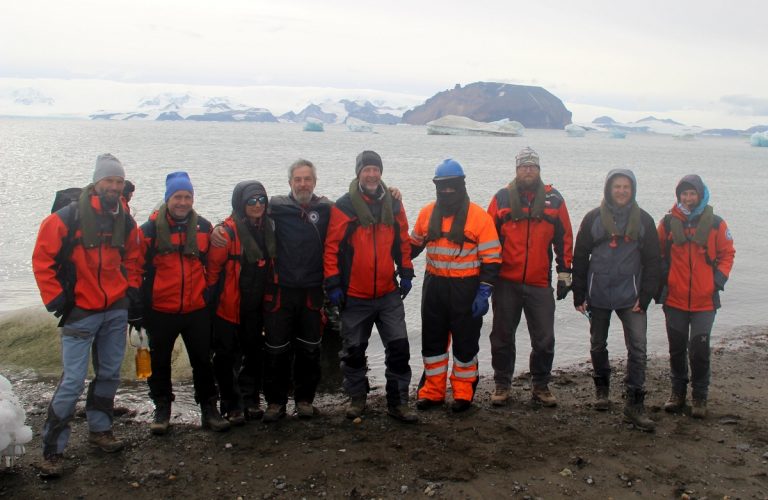
Nineteen scientists and technical staff will set off for the J.G. Mendel Czech Scientific Station on James Ross Island in early January. A smaller group of eight polar explorers is preparing to set off for Nelson Island at the end of January, in cooperation with the national programs of Ukraine, Turkey, China and Chile. This year’s participants in both expeditions met in November for training, which they must all complete before travelling to the harsh Antarctic conditions. The training covers legal, environmental and safety topics, as well as the health and psychological aspects of participating in the expedition.
“The expedition to James Ross Island will traditionally focus on monitoring climate development, the state of glaciers and permafrost, as well as research on lower plants,” said Daniel Nývlt from the Institute of Geography at the MUNI Faculty of Science. “A new feature is the deepening of cooperation with Charles University, which resulted in the long-term establishment of a new research section for monitoring the natural environment. The second smaller expedition, in addition to its own research, will attempt to repair the crumbling technical and logistical background of the Czech Nelson field camp.”
On Nelson Island, the remains of the buildings of the former station founded in 1988 are used to store materials, and researchers are currently living there in tents. Given the specific conditions and strategic location of the island, the Czech Antarctic Research Program, based at the MUNI Institute of Geography, will try to repair the existing buildings, in the hope of preserving the base in order to temporarily extend its lifespan. In the future, a completely new modern facility is to be built on the island for the needs of Czech and international scientists.