

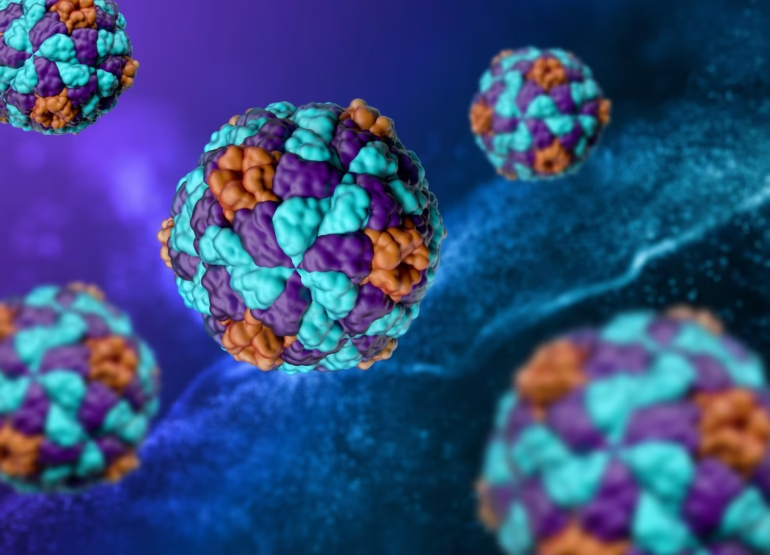

Doctors have recorded 2,880 cases of hepatitis A in the Czech Republic this year, which is 20 times more than last year and the highest incidence since 1984, according to data from the National Institute of Public Health (SZU). 32 people have died from the disease this year, up from two in 2024
The highest number of infected people, more than 40% of the total, is in the capital of Prague, where nearly 50 cases have been detected in the past week. Prague is followed by the Central Bohemia and Moravia-Silesia regions.
Cases are being reported in all age groups, from the youngest children to the elderly, while the most common age groups are 35 to 39 years (316), 40 to 44 years (272) and 30 to 34 years (257). In children, most cases are recorded in the age group of five to nine years, according to SZU.
People aged over 65 are more likely to be protected, because they lived through the major epidemic in the late 1970s and have antibodies, according to SZU.
About one-fifth of the sick are vulnerable people such as drug addicts, alcoholics, or homeless people.
More than three-quarters of those infected have had to be admitted to infectious disease wards in hospitals. “Cases of hepatitis A must be compulsorily reported in the Czech Republic and are among the infectious diseases for which isolation in inpatient health care facilities is ordered,” SZU warned.
Unvaccinated contacts of infected patients and those who did not previously contract the disease are also under medical supervision. They are not allowed to go to the public swimming pool, sauna, gym, to work, or to go to children’s camps, for a month. Those close to infected individuals are vaccinated to prevent the disease from progressing. Nearly 5,000 people have already been vaccinated in Prague alone.
The fatal hepatitis cases included 28 men and three women. “The risk of a severe course and death increases with age and is higher in people with chronic liver disease and weakened immunity,” SZU said. Almost one-third of the deceased are aged 60 to 69.
Vaccination is also in high demand in the Czech Republic, with doctors administering more than 220,000 doses this year, compared to around 66,000 last year. Extra supplies of vaccines are also heading to the country because of the vaccine shortage. The Health Ministry previously reported that there would be over 125,000 doses by January.