


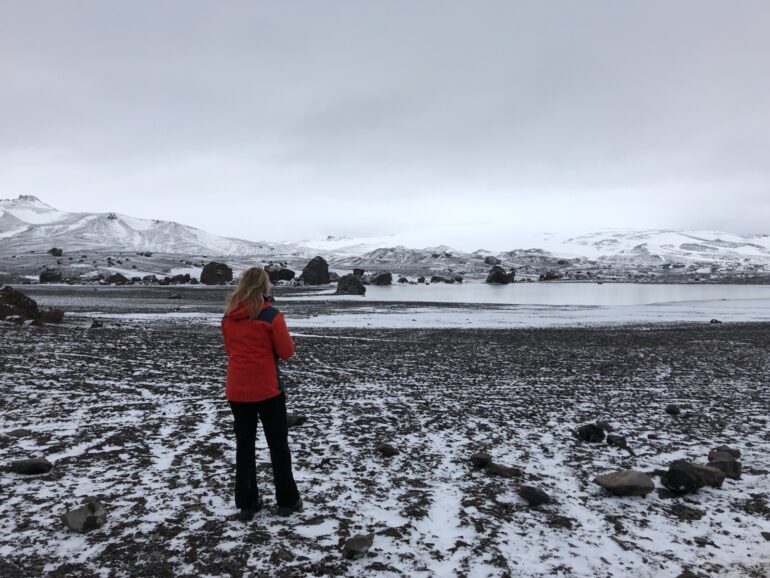

Scientist Stanislava Bezdíček Králová from the Faculty of Agronomy at Mendel University in Brno (MENDELU) is taking part in a scientific expedition to Antarctica, where she is researching the DNA of microorganisms capable of surviving in extreme conditions. Her work is being carried out on James Ross Island under the Czech Antarctic Research Program, coordinated by Masaryk University.
Bezdíček Králová has previous experience with polar research, having collected bacterial samples in Antarctica five years ago. This year, however, her focus has shifted to the study of environmental DNA, which provides insight into how Antarctic microorganisms adapt to harsh conditions. The research aims to understand how local bacteria produce bioactive peptides and whether these substances are uniquely adapted to the Antarctic environment.
Bioactive peptides are known for their antimicrobial and anticarcinogenic properties, but their potential applications extend further. According to the researcher, they may also act as antifungal agents or be used in protective sprays. Alongside peptide chemistry, the project also examines enzymes involved in peptide production, which are adapted to function at very low temperatures. These enzymes could potentially be used in industrial or medical applications in cold environments outside Antarctica.
A key part of the research involves isolating environmental DNA from samples collected on site. Ideally, the material would be dried immediately, but due to technical limitations at the research station, the samples will be frozen and transported to laboratories for further processing. Once in the Czech Republic, the DNA will be dried, sequenced, and analysed in collaboration with teams from Brno University Hospital and Brno University of Technology.
Antarctica is currently experiencing summer, offering the most suitable conditions for field research, with temperatures ranging roughly between –10 °C and 10 °C. Despite this seasonal warming, microorganisms endure extreme cold throughout the year. Repeated cycles of freezing and thawing place enormous stress on living cells, making the survival of Antarctic bacteria particularly remarkable.
By analysing environmental DNA, scientists hope to better understand the biochemical processes that allow microorganisms to function in such extreme cold. This knowledge could contribute to the development of new methods for controlling pathogens or creating chemical processes that are active only at low temperatures. According to Bezdíček Králová, the project represents the first time genetic information from Antarctic microorganisms will be studied in this way by the research team.