


The incoming Czech government, formed of ANO, Freedom and Direct Democracy (SPD), and the Motorists, will publish and sign their coalition programme agreement today, alongside the opening session of the new parliament following the October elections.
The coalition, led by ANO leader Andrej Babis, has pledged in its draft policy statement not to raise any taxes, and, on the contrary, it wants to cut corporation tax from 21% to 19%, according to CTK.
The three parties also confirm the planned reintroduction of the electronic registration of sales (EET) system from 2027, and commit not to adopt the euro or take any steps towards its introduction.
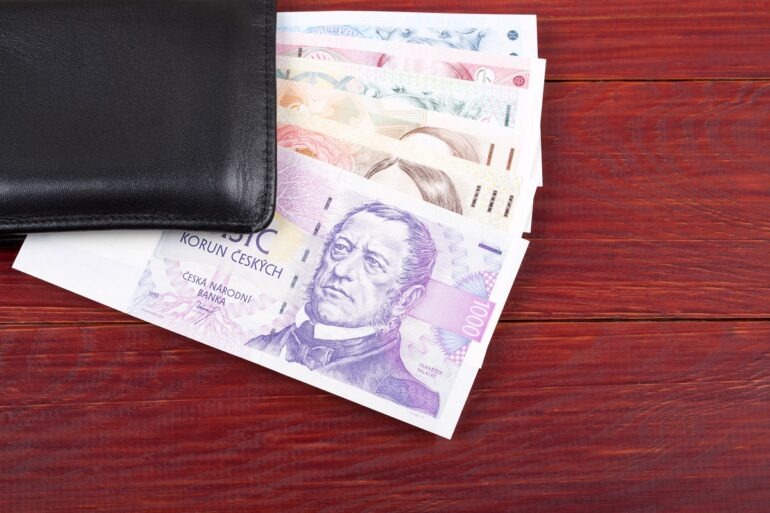
“The Czech crown is the key to our economic sovereignty,” reads the statement. “We pledge that our government will not adopt the euro or take any steps towards its introduction. We will propose to parliament that the Czech crown be enshrined in the Czech Constitution, as well as the right to hold and use cash as legal tender.”
The three parties also say they intend to keep the Czech Republic’s public finances balanced, below the 3% deficit limit required by the EU Stability and Growth Pact, according to the draft policy statement.
“Thanks to massive investments in long-term economic growth, consistent implementation of economic strategy, and savings in state operations, we will achieve a gradual reduction in the public finance deficit. In the longer term, we will also achieve a virtually balanced or surplus state budget,” the draft states.
In the area of economy, the new government is also planning to change the construction law and reduce agricultural subsidies for inactive farmers with non-productive farming, it says in the draft policy statement.
“We commit not to raise any taxes,” the parties write. “On the contrary, we will stop increasing the assessment base for social insurance for the self-employed, which will remain at 35% of the average wage. We will reduce the corporation tax to 19% in order to support entrepreneurship, investment, the attractiveness of the Czech Republic and job creation.”

They also plan to abolish the cap on leisure benefits for employees, introduce 0% value added tax on prescription drugs, and stop the automatic indexation of property tax through inflation coefficients.
The EET system will not apply to those with small trades and casual earnings, according to the statement. The planned system will not require mandatory printing of receipts or a continuous online connection. “The measure will be tied to specific concessions – for example, a direct tax rebate for those registering self-employed, a halt to the increase in levies on self-employed workers, exemption of tips, lower VAT in catering, lower corporate income tax, and so on,” the parties pledge.
In addition to EET, other planned measures to reduce the grey economy include the introduction of digital tax monitoring, which would use advanced tools to detect fictitious transactions and illegal tax avoidance, and the expansion of the powers of the Czech Customs Administration.
EET was introduced by the government of Social Democrats and ANO in 2016 as a tool to curb tax evasion, especially in the case of VAT. It was suspended from spring 2020 until the end of 2022 due to the COVID-19 pandemic, and then abolished by the government of Petr Fiala (ODS) from January 2023.