
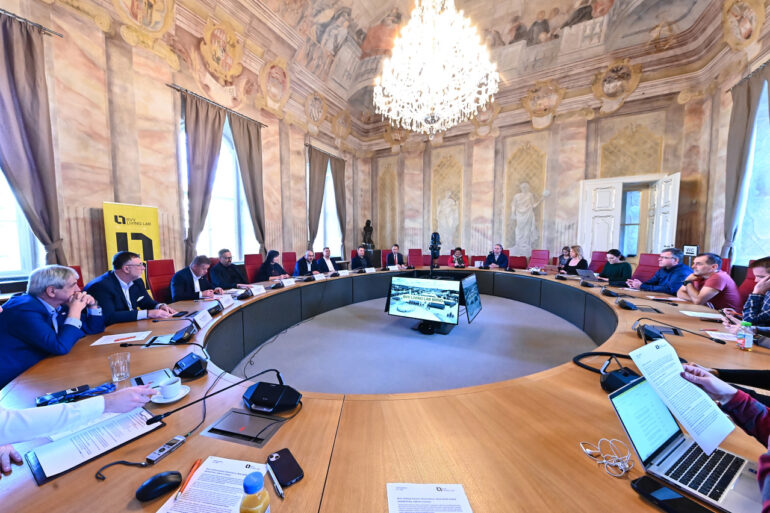

A new association, BVV Living Lab Brno, is being established in the South Moravian capital, with the aim of strengthening the city’s position as a center for research and innovation. The initiative is based at the Brno Exhibition Center, and will coordinate the cooperation between key city companies, universities and other partners of the regional innovation ecosystem. The purpose is not only to develop technological innovations, but to verify them in practice and prepare them for use in the regular economy.
The founding members of the association are Brno Trade Fairs, Teplarny Brno, the Brno Transport Company (DPMB) and SAKO Brno. The project has significant support from the City of Brno and the South Moravian Region and is part of the national Czech Living Labs platform and the European Network of Living Labs (ENoLL).
“Brno has long been profiled as a city that can combine top research, technology companies and public administration into a functional whole,” said Brno Mayor Markéta Vaňková. “By establishing BVV Living Lab Brno, we are taking this cooperation to a new level and confirming the aspiration of the South Moravian capital to become one of the European leaders in urban innovation.”
According to Vaňková, the goal of the new association is to verify urban innovations in the real functioning of the city, and thereby develop systems that improve the quality of life of residents and the competitiveness of the South Moravian region. “At the same time, involvement in EnoLL opens the door to international cooperation and sharing know-how with the most progressive cities in Europe,” she added.
“By establishing the association, we are giving the Brno innovation environment a practical tool that has one key ambition – to shorten the path from a good idea to a solution that really works in the field,” said Jan Kubata, CEO of Brno Trade Fairs. “We do not want innovations to remain only at conferences, presentations or closed laboratories. The purpose is to verify technologies in real conditions, collect data and feedback from users and infrastructure administrators. The exhibition center offers an exceptional background and the ability to connect worlds that are normally overlooked.”
Brno as a European hub of urban innovation
Many urban innovations today end up in prototypes or isolated pilot projects. BVV Living lab Brno aims to fill this gap by forming a bridge between testing and actual deployment in city operations.
By 2030, the new association will function as a platform for the creation and coordination of technologies in the areas of smart mobility, sustainability, energy, circular economy, and social and digital innovations. Its task will be to connect stakeholders, assist with project preparation, ensure testing of solutions, and support their eventual implementation in Brno.
“In addition to projects by city companies, the living laboratory also wants to provide testing opportunities for startups and small and medium-sized enterprises, especially in the areas of future mobility, energy, sensors and e-health,” said Anna Putnová, the City of Brno’s representative for innovation and cooperation with research organizations.
The exhibition center as a “city within a city”
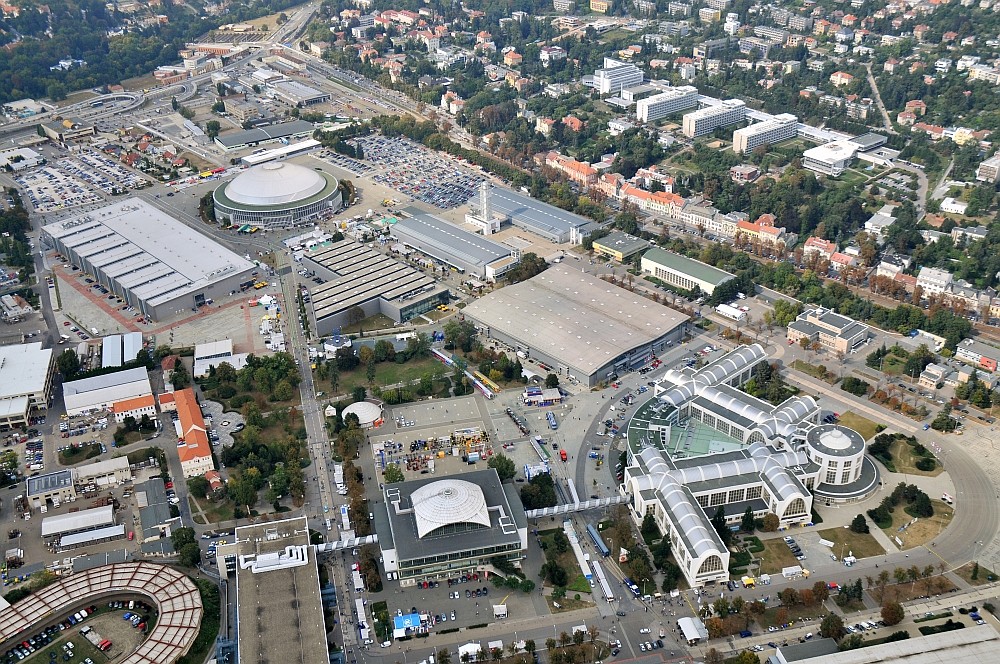
One key competitive advantage of BVV Living Lab Brno is the environment of the Brno Exhibition Center, which has a unique combination of real infrastructure, traffic, and people movement – ideal conditions for testing technologies on a real city scale. The combination of a living laboratory with trade fair and conference events allows innovations to be presented in a clear way to the professional public, partners and investors.
The project also builds on cooperation within the #brnoregion regional innovation ecosystem and strengthens the connection between science, research, business, and the public sector.
Pilot topics: energy, sustainability, mobility and data
In the initial phase, the association will focus on four key areas, reflecting the interests of the founding member organisations.

The first direction is energy transformation, including flexibility, predictability, and smart grids. “Teplárny Brno has a lot of experience in successfully implementing new technologies into safe and reliable operation,” said Petr Fajmon, CEO of Teplárny Brno. “BVV Living Lab Brno is a natural step for us in the development of the city’s energy ecosystem and a practical tool for testing new approaches directly in a real environment. In the first phase, we will focus mainly on e-mobility. In cooperation with BUT and other partners, we want to test, for example, charging systems, charging stations and vehicle to grid solutions, so that smart mobility can be implemented in practice in Brno as quickly and safely as possible.”
The second area is the circular economy, specifically the digitalization of collection logistics and sorting. “The idea of testing innovations and implementing them in practice in a real urban environment appealed to us,” noted Pavel Urubek, chairman of the board of directors of SAKO Brno. “On the BVV Living Lab Brno platform, we want to explore the integration of smart solutions into the optimization of collection routes, which would predictably respond to changes in capacity trends in waste generation, and allow us to effectively balance the frequency of collection in terms of purposefulness, maximum efficiency and fuel savings. We will focus further pilot projects on training machine learning and computer vision models, usable for automated analysis of waste composition, detection of dangerous objects, and energy infrastructure maintenance.”
The third pillar will relate to the field of safety and smart mobility, including transport systems, safe corridors and autonomous mobility. “The importance of the BVV Living Lab Brno for DPMB lies primarily in the possibility of testing modern and innovative modes of transport in real city conditions – whether that means autonomous elements, new traffic management technologies, or alternative energy sources. Connecting testing with regular operations is crucial for us,” said Miloš Havránek, CEO of DPMB.
The fourth area is digital infrastructure and data, including the development of a 5G network, data hub and IoT infrastructure. The first pilot scenarios are planned for the beginning of 2026, and the development will also include the Open 5G Hub Brno project, which will officially launch with a presentation during the AMPER 2026 trade fair.
Space for innovation with an impact
BVV Living Lab Brno aims to become an incubator where ideas can turn quickly into proven solutions, and where innovation meets the real needs of the city and its inhabitants. By connecting the public, academic and private sectors with the users themselves, the project has the ambition to accelerate the development of innovations and increase their real impact on infrastructure, mobility, and everyday city services.