


The incoming government of ANO, SPD and the Motorists signed its coalition agreement yesterday, following policy negotiations lasting just over a week. Here, we take a look at what the document and potential members of Andrej Babis’s new government have said about the critical and controversial area of environmental policy.
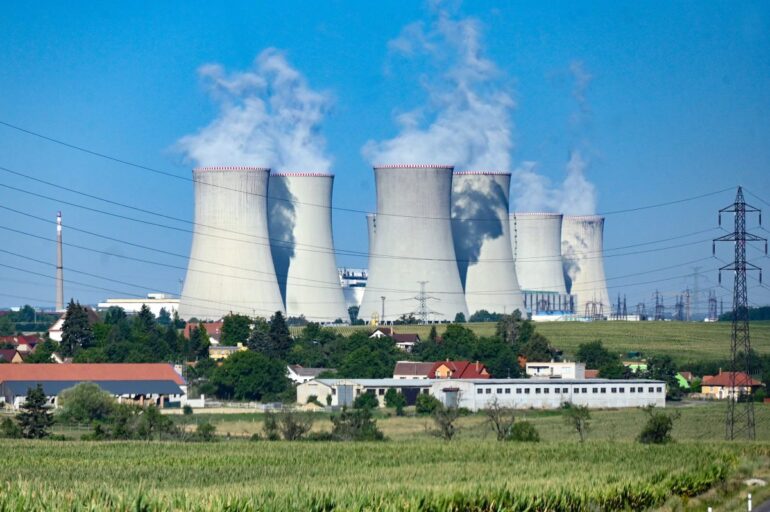
The policy statement confirms the plan to reject the new ETS2 emission allowances and also envisages the development of nuclear energy. It further states that the new government wants to revise the current form of the Green Deal, revise the erosion decree, and support the development of waste-to-energy facilities (ZEVO).
In the coalition agreement
In protecting the environment, the future government says it wants to take a pragmatic approach to climate policy, based on scientific knowledge. It acknowledges that the impacts of climate change are also being felt in the Czech Republic, and says it wants to focus on projects that will bring energy savings, cleaner air and landscape restoration.
Nevertheless, the statement describes the new European climate targets as unrealistic. In addition to revising the European Green Deal, as proposed by all three parties in their election manifestos, the future cabinet also rejects the EU’s ban on the sale and production of cars with combustion engines by 2035.
The agreement also calls for an overhaul of the current erosion decree, which it claims degrades land and raises administrative obstacles for farmers. The coalition plans to promote adaptation and retention measures in the landscape, such as copses, windbreaks, borders and small reservoirs.
The new cabinet also plans to speed up the construction of strategic water reservoirs such as Nove Herminovy, Vlachovice and Skalicka, which it says are key to reducing the risk of floods and droughts.
The future government would only introduce a PET bottle and can deposit system if a clear environmental benefit is demonstrated, ensuring that it does not disrupt municipal waste sorting systems. They state their opposition to the introduction of recycling charges that burden the printing and distribution of advertising leaflets, which they say are an important source of information on discounts and offers, especially for the elderly.
The government is also planning a major revision of the financing of environmental initiatives from public money, and wants to direct part of the released funds to adaptation measures in the countryside and municipalities.
In addition to the development of ZEVO, the parties want to make the case at the European level that the emission allowance system should not be extended to energy recovery. The policy statement does not indicate whether programmes such as the New Green Savings or subsidies for environment-friendly boilers will continue, despite pledges in ANO’s election manifesto that they would be maintained.
The policy statement also lacks information dealing with the protection of national parks.
Environmental organisations are also concerned about the possible appointment of Motorist Party leader Petr Macinka as Environment Minister, given his ties to climate sceptic groups and long-standing rejection of the scientific consensus on climate change.
Obstructionism in Europe?
Based on a leaked draft of the coalition programme, Brussels-based news server Politico reported that Babis’s first major act on the European stage will be to attempt to derail European Union plans for the new emissions trading system (ETS2) and seek to reduce distribution and transmission fees. The government’s programme states that the EU has no right to impose decisions on member states which interfere with their internal sovereignty.
European officials are braced for contact with Babis at the EU summit on 18-19 December. Although many have expressed concern that he will join forces with Orban and Fico to block further aid for Ukraine, Politico notes that Babis seems more focused on undermining the EU’s Green agenda. He may therefore find an ally in Polish Prime Minister Donald Tusk rather than in Orban.
If Tusk teams up with Babis, it could threaten the fragile EU consensus on climate policy.
ETS2: A potential political football
ANO MP Patrik Nacher said that the future government would do its utmost to ensure that ETS2 is not introduced in the Czech Republic in its current form, which would see the system of emission allowances extended to road transport and heating.
Over the weekend, outgoing Environment Minister Petr Hladik (KDU-CSL) said in an interview with Terezie Tomankova on CNN Prima News that the Czech Republic must respect the approved European legislation on the ETS2 emissions system, or risk financial penalties and the loss of access to EU funds.
If the Czech Republic were to reject ETS2, it would face fines and a reduction in income from the system of emission allowances, which subsidise measures to reduce emissions and energy use through the Modernisation Fund and other mechanisms. Rejecting ETS2 outright would require a majority in the EU, which the outgoing government of Prime Minister Petr Fiala (ODS) could not obtain.
Hladik noted that the Czech Republic, leading an initiative of 19 other member states, instead pushed for changes to the ETS2 system, such as a cap on the price of emission allowances. The European Commission accepted the initiative and promised to come up with a new proposal that would include legislative changes.
Under the emission allowance system, one allowance allows one tonne of carbon dioxide or an equivalent amount of another gas to be emitted into the air. EU member states should use the proceeds from the sale of these allowances for climate protection measures. Currently, the EU ETS covers power stations and industrial plants that produce greenhouse gases. The European Commission wants to extend the allowance system under the EU ETS 2 label to cover road transport and heating in buildings. The aim of the emissions trading scheme is to reduce emissions that have an impact on climate change.
“We will do our utmost to reject ETS2,” said Nacher. “We must do green policy sensibly and not undermine competitiveness.” He added that ANO would be willing to reject the system even at the cost of fines.
In its resistance to comprehensive EU-wide regulations to reduce emissions, the new government seems likely to continue the general path taken by Fiala’s outgoing government. At today’s meeting of EU environment ministers, the Czech Republic is to vote against the EU’s proposal to reduce emissions by 90% by 2040, according to outgoing Czech Environment Minister Hladik, who added that the country has long rejected this goal as unrealistic.
“We do not yet see sufficient technological options to achieve such an ambitious target without a major impact on key industries such as chemistry or materials production,” he said, adding that for this reason, the Czech Republic supports ‘technological neutrality’ – maintaining support for nuclear energy, hydrogen production or carbon capture and storage technologies.